

"Explore the rich tapestry of the Malabar region, where centuries of history, culture, and tradition come together.

Get In Touch

img

University of Calicut,
Edapally - Panvel Hwy, Thenhipalam,
Kerala 673635, India

Malabar History journal

  • Home
  • Malabar History journal
Blog Image

Vakkom Moulavi and the Islahi Reform Movement in Kerala

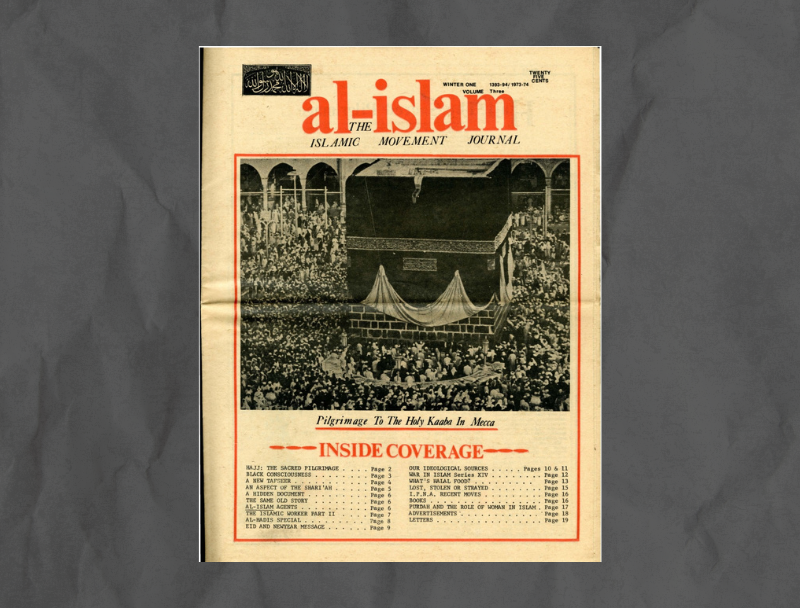
Vakkom Abdul Qadir Moulavi (1873-1932) is widely recognized as a Muslim reformer and patriot. He was the publisher of the newspaper Swadeshbhimani, which was confiscated by the Travancore Dewan. He was also an Islamic scholar who launched three journals dedicated to promoting reformist ideas—Muslim, al-Islam, and Deepika—and an educationist with the authority to conduct qualifying exams for Arabic teachers. Based in Travancore, his reformist ideas inspired young minds across Kerala. His journals, speeches, writings, actions, and mentorship played a crucial role in establishing the reform (Islahi) movement in Kerala, particularly through the leadership of Kerala Jamiatul Ulama and later Kerala Nadwatul Mujahidin. Four aspects of his contribution are highlighted here: the translation of the Quran, the dissemination of ideas by the Egyptian reformer Rashid Rida, the reformulation of tauhid and the defense of Wahhabi thought, and the mentoring of the founders of the Islahi organization in the state.

The Quran Translation: Although translating the Quran into various languages is widely accepted by most ulama groups in Kerala today, this was not the case a century ago. Given the Quran’s status as divine communication, translation was still a contested practice. Vakkom Moulavi was one of the first to translate and publish the Quran in Malayalam. In 1918, he published a translation of the Quran in Arabi-Malayalam, a script he believed Muslims held in reverence. In 1931, he published a translation of the first chapter and part of the second chapter in Malayalam. In the introduction, he acknowledges the challenges of translating the Quran into foreign languages—particularly Malayalam, which he felt lacked the nuance to convey its rich meanings. Nonetheless, he felt translation was necessary, as many Muslims and non-Muslims requested it. While Muslims could read Arabi-Malayalam, non-Muslims needed a Malayalam version. In the following decades, many scholars took on the task of translating the entire Quran, some working individually and others collaboratively. Initially, these efforts were led by reform-minded scholars, but others soon followed.

Introducing al-Manar: Writings by Egyptian scholars like Muhammad Abduh and Rashid Rida circulated widely among reform-minded Muslims globally. Vakkom Moulavi subscribed to al-Manar, a journal edited by Rashid Rida, and was familiar with Tafsir al-Manar. He corresponded with Rida, whose responses were published in al-Manar in 1929, and introduced this journal and tafsir to Kerala’s Salafi movement leaders. Vakkom Moulavi first learned about al-Manar through an Egyptian scholar introduced by a relative, who gifted him a copy that left a strong impression. He later subscribed to the journal and published translations of several al-Manar essays in al-Islam. In a 1929 letter to Rida, initially written as a complaint about not receiving the journal for the past three years after nine years of regular delivery, Moulavi expressed his deep admiration for al-Manar, stating that it had given him new life, direction, and insight. Although his publication of al-Manar’s ideas initially faced opposition and earned him the label of Wahhabi, some eventually subscribed to al-Manar themselves, recognizing the fresh perspectives it offered.

KM Moulavi, who became the first president of Kerala Nadwatul Mujahidin, learned of al-Manar and its tafsir through Vakkom Moulavi. Books on the history of Salafism and the Mujahid movement recognize Vakkom Moulavi’s role in introducing al-Manar, which significantly influenced the movement’s reach. The Quran translations and interpretations he published in al-Islam in June 1918 were excerpted from Tafsir al-Manar.

Reformulating Tauhid and Defending Ibn Taymiyyah and Muhammad bin Abdul Wahhab: Vakkom Moulavi was critical of practices like saint veneration, intercession, and certain local rituals. While his views may have been influenced by contemporary social reform movements, his theological writings clearly drew on the fourteenth-century Islamic scholar Ibn Taymiyyah (1263-1328). He distinguished between two forms of tauhid (oneness of God): tauhid uluhiyya, affirming God’s oneness as the sole object of worship, and tauhid rububiya, affirming God’s oneness as the supreme lord and authority. Regarding the former, he referenced the Quranic characterization of polytheists in Mecca, who believed that intermediaries could bring them closer to Allah. Vakkom Moulavi argued that this contradicted tauhid uluhiyya and, in doing so, subtly criticized Muslims who visited tombs seeking intercession as engaging in a similar error. This understanding of tauhid was seen by the traditional ulama in Kerala during Moulavi’s time as a deviation and an innovation. However, the Taymian view of tauhid and its critique of saint veneration—equating it with polytheistic practices in pre-Islamic Makkah—would become a central aspect of the Islahi movement’s criticism of conventional Muslim practices in Kerala.

Vakkom Moulavi faced opposition for preaching these ideas and was labeled a Wahhabi. He believed that for the reform movement to succeed, it was essential to clarify misconceptions about Ibn Taymiyyah and Ibn Abdul Wahhab. Kerala’s ulama accused these scholars of deviating from true Islam, citing contemporary religious authorities. In response, Moulavi wrote an essay in Yuvalokam in 1928, defending Wahhabi thought against local allegations, and two years later published Dau al-Sabah, which elaborated on the ideas of these scholars and countered criticisms from local ulama. Through these works, he aimed to make these otherwise controversial figures acceptable among Kerala’s Muslims. Drawing inspiration from these scholars, he advocated for a return to the Quran and Sunnah, rather than expending energy on complex, redundant Islamic legal texts.

Islahi Leadership in the Twentieth Century: Through his writings, books, correspondence, and mentorship, Vakkom Moulavi inspired a generation of scholars who would lead the Islahi movement in the twentieth century. Many of these figures resided at the Muslim Hostel in Trivandrum, which he established to accommodate Muslim students and employees studying and working in the capital. He visited the hostel on a biweekly basis, engaging in discussions with the residents. KM Moulavi (1886–1964) closely collaborated with him during his exile from Malabar following the Malabar Rebellion, later becoming a prominent face of the reform movement. Another key figure influenced by Vakkom Moulavi was Arakkal Muhammad Moulavi, also known as Edavanna Muhammad Sahib, who invited him to Edavanna in Malappuram, which eventually became a stronghold of the Islahi movement. Arakkal Muhammad Moulavi encouraged his followers to read Vakkom Moulavi’s journals, Muslim and al-Islam, leading many to discard customary practices in favor of a Salafi interpretation of Islam. He was also a subsriber of al-manar. KM Seethi Sahib, who played a crucial role in Kerala Jamiyatul Ulama (a reform-oriented scholars’ association) and served as a Muslim League leader, was greatly influenced by Vakkom Moulavi and resided at the Muslim Hostel.

The Islahi movement in Kerala, which initially emerged as the Kerala Muslim Aikya Sangam, later became the Kerala Jamiyatul Ulama, and eventually evolved into the Kerala Nadwatul Mujahidin, openly acknowledges its profound debt to Moulavi’s ideas, as well as his methods of preaching and disseminating knowledge.

References

  • Abraham, Jose. “Modernity, Islamic Reform, and the Mappilas of Kerala: The Contribution of Vakkom Moulavi (1873 – 1932).” PhD Diss., McGill University, 2008.
  • Gafoor, P. M. A. Kalavum Kalpadum (Mal. The Time and Foot Print). Calicut: Yuvatha Book House, 2014.
  • Kallikkandi, Ishaq. Mujahid Prastanam Keralathil. Calicut: KNM Publishing Wing, 2017.
  • Suhair, A. and K.M. Ajeer Kutty (eds.). Vakkom Moulavi: Avarude Kazchapadil. Trivandrum: Vakkom Moulavi Foundation Trust, 2014.
  • Vakkom Abdul Qader Moulavi (ed.). Vakkom Moulaviyude al-Islam Otta Valyathil. Trivandrum: Vakkom Moulavi Foundation Trust, 2016.