
"Explore the rich tapestry of the Malabar region, where centuries of history, culture, and tradition come together.

Get In Touch

img

University of Calicut,
Edapally - Panvel Hwy, Thenhipalam,
Kerala 673635, India

Malabar History journal

  • Home
  • Malabar History journal
Blog Image

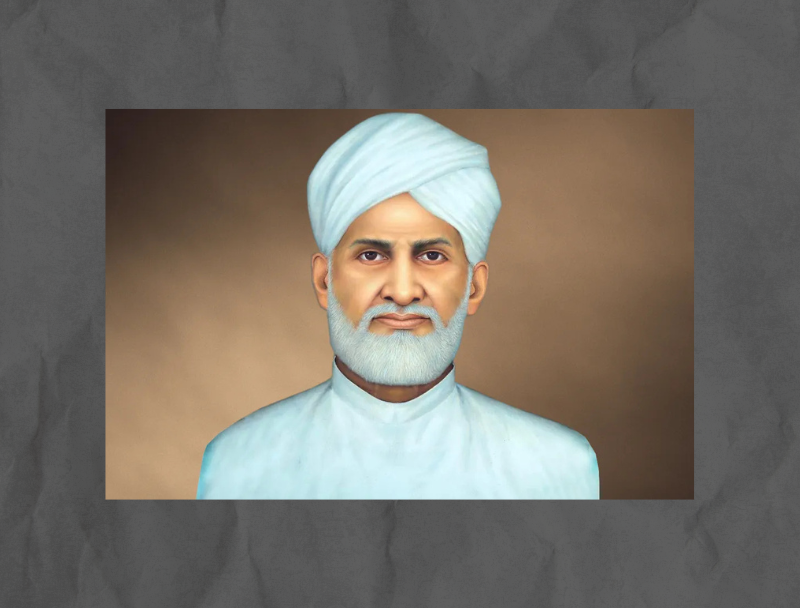
Vakkom Abdul Qader Moulavi’s Educational Reform

Useful knowledge or instruction was a pervasive trope that colonial authorities in India employed to frame their policies on education. The utility of a specific system of instruction became the criterion for deciding whether to fund it. Religious education became a target of government reform in colonial India because its usefulness in civilizing the population was contested. Islamic reformists from various streams responded to these interventions by emphasizing the relevance of religious education and making necessary changes to the Islamic education system. Reformists’ measures in this regard in Kerala were shaped in response to colonial and indigenous government policies, evangelical missions’ educational and polemical interventions, and familiarity with reformist initiatives by Islamic scholars in Egypt. An important figure in this context is Vakkom Moulavi, an educationist, prolific writer, publisher, and Islamic scholar.

“The great end should not have been to teach Hindoo learning, or Mahomedan learning, but useful learning,” (quoted in Zaman 2003) wrote James Mill in 1824, commenting on the allocation of East India Company funds for education in India. For Utilitarians like Mill, indigenous religious education had no practical value and therefore was not worth funding. However, Utilitarians were not the only ones to use the discourse of useful instruction. Orientalists, while not dismissing the importance of learning English and subjects taught by Europeans, argued for patronizing the ancient wisdom of the Orient by recovering it from ancient texts. Both these perspectives influenced how religious learning was conceived by Islamic reformers during the colonial period.

Firstly, Islamic reformists like Vakkom Moulavi introduced a distinction between religious and secular learning, although his intention in doing so was to integrate them. The traditional dars curriculum in Kerala consisted of subjects such as Islamic jurisprudence, Hadith, Tafsir, and aqida on one hand, and logic, philosophy, and geography on the other. These subjects were categorizedrespectively as “revealed” and “rational,” with the latter primarily seen as auxiliary subjects that helped students understand the former.

Vakkom Moulavi advocated for the teaching of subjects like arithmetic, history, geography, science, arts, and literature, though he reportedly faced opposition from Muslim ulama. The purpose of teaching these subjects was redefined: they were no longer auxiliary but were considered secular subjects aimed at helping Muslims modernize trade and agriculture, attain jobs in administration and the emerging cash crop industry, and achieve material advancement. His educational reform entailed reorganizing subjects into secular and religious categories and promoting subjects that would help Muslims thrive materially. The earlier curriculum, which included logic, philosophy, and commentary texts of Islamic jurisprudence, not only hindered students from studying the Quran and Hadith but also required them to spend time on topics that offered them little benefit. By proposing the inclusion of modern subjects to replace redundant content, he sought to replace “useless” instruction with “useful” instruction.

The concept of useful knowledge (ilm nafi’) is not foreign to Islamic scholarship. Thus, prophetic sayings and medieval Muslim scholarship make a distinction between useful knowledge and harmful knowledge. This distinction, however, had less to do with material advancement than with the prospect of salvation it was likely to yield. Moulavi’s concept of useful knowledge resonated more with the utilitarian understanding than with early medieval scholarship.

Orientalist scholarship on the glory and decline of civilization influenced his call to acquire religious knowledge. Moulavi was not a modernist in the sense of rejecting religious knowledge altogether and instead advocating for secular education alone. One of his goals was to establish a central madrasa to train religious scholars who would disseminate correct Islamic knowledge and be equipped to teach in madrasas across the state. Furthermore, he insisted that Muslim students receiving modern education should also receive religious instruction, as they were often socialized in environments removed from Islamic teachings and thus might adopt “evil characters” similar to those of educated Westerners. Nevertheless, in articulating the relevance of religious education, he could not separate it from discussions of moral education and material prosperity. One of his contentions was that moral education was essential for nobility and excellence in material spheres. He admired the first generation of Muslims, viewing them as models of prosperity due to their diligence in observing religious obligations and practices. Thus, moral education was framed within a discourse of progress, with a certain instrumental benefit attached to it.

In addition to his efforts to reform the purpose and scope of education, he sought to reduce excess and address deficiencies to channel students’ time effectively toward acquiring essential and productive knowledge. Moulavi believed that the existing centers of Islamic learning had significant excesses, such as the study of Islamic law. He argued that a Muslim could learn what is prohibited and allowed by referring to the Quran and Hadith alone, but jurists had used reason and imagination to multiply these laws, leading to complexity. Even after fifteen years of study, many students could not discern what was prohibited and allowed because they were introduced to a multitude of moral categories and unnecessarily complicated jurisprudential issues. Moulavi advocated reducing such excess, suggesting that instead of delving into complex Islamic theology, students should engage in acquiring useful knowledge, particularly in unfamiliar fields.

It is not surprising, then, that Moulavi invested his time in standardizing religious and Arabic education. He was concerned that despite years of study, few scholars were proficient enough to translate from Arabic to Malayalam. To address this, he supported the Travancore government’s decision to appoint Arabic teachers in schools but was disappointed by the lack of qualified individuals to seize this opportunity. In response, he personally led Arabic classes at his residence, producing many Arabic teachers who were later employed by the government. He also used Arabic texts published abroad for instruction.

Another measure he took was submitting a proposal to the Travancore government to conduct qualifying exams for appointing Arabic teachers to ensure effective teaching. He was appointed head of the examination body and chair of the Arabic Textbook Committee, which was responsible for designing examination syllabi and selecting appropriate textbooks for primary, secondary, and high schools. He wrote textbooks for primary schools and, to improve teaching methods, borrowed pedagogical techniques from Egypt.

Moulavi’s educational reform was profoundly influenced by the notion that education—whether religious or secular—should contribute to both spiritual and material advancement. He viewed the existing system of religious education as redundant, repetitive, and overly complex, with little practical value. Impressed by the educational standards set by missionaries and the colonial government, he was committed to promoting religious education, though his concept of its purpose was influenced by the utilitarian idea of knowledge espoused by British policymakers.

References

  • Abraham, Jose. “Modernity, Islamic Reform, and the Mappilas of Kerala: The Contribution of Vakkom Moulavi (1873 – 1932).” PhD Diss., McGill University, 2008.
  • Suhair, A and K.M. Ajeer Kutty (eds.). Vakkom Moulavi: Avarude Kazchapadil. Trivandrum: Vakkom Moulavi Foundation Trust, 2014.
  • Zaman, Muhammad Qasim. “Religious Education and the Rhetoric of Reform: The Madrasa in British India and Pakistan.” Comparative Studies in Society and History, no. 2 (1999): 294–323.
  • —. The Ulama in Contemporary Islam: Custodians of Change. Princeton: Princeton University Press, 2002.
  • Zubair, K. “Development and Modernization of Religious Education in Kerala: Role of Samastha Kerala Jameyyathul Ulama.” MPhil Diss., Jawaharlal Nehru University, 2006.