
"Explore the rich tapestry of the Malabar region, where centuries of history, culture, and tradition come together.

Get In Touch

img

University of Calicut,
Edapally - Panvel Hwy, Thenhipalam,
Kerala 673635, India

Malabar History journal

  • Home
  • Malabar History journal
Blog Image

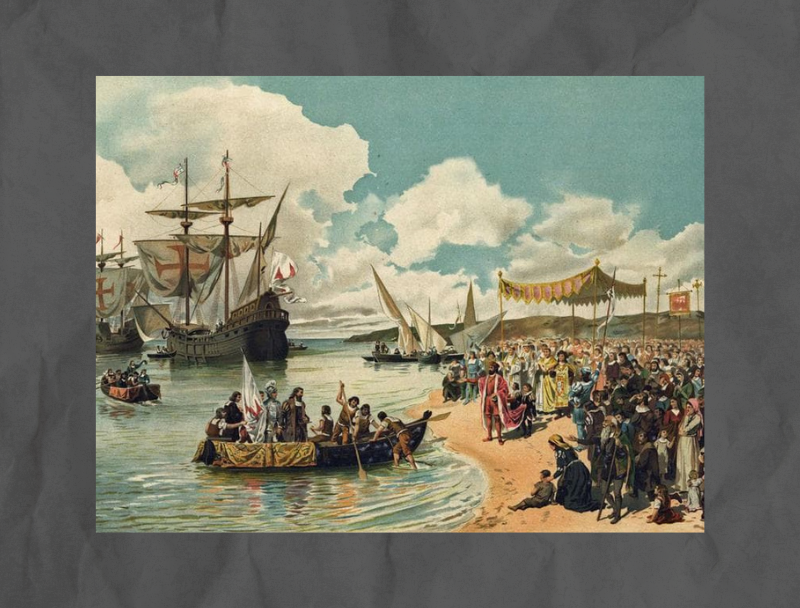
The first voyage of Vasco da Gama and His ships

The first expedition of Vasco da Gama was undertaken with the order by King Dom Manuel, aiming to discover a direct sea route from Portugal to India. The Da Gama was the captain-major of the expedition. The fleet departed from Lisbon on July 8th, 1497, and consisted of four ships. Vasco da Gama commanded the São Gabriel, the flagship, with Pero de Alenquer as its pilot, Gonçalo Álvares as the master, and Diogo Dias as the clerk. Paulo da Gama, Vasco’s brother, captained the São Rafael, with João de Coimbra as its pilot and João de Sá as the clerk. Nicolau Coelho captained the Berrio, assisted by P. Escolar as the pilot and Álvaro de Braga as the clerk. Gonçalo Nunes commanded the cargo/store ship.

After rounding the Cape of Good Hope and reaching the watering place of São Brás, the provisions and crew aboard Gonçalo Nunes’s ship were redistributed among the other vessels. The emptied store ship was then burnt. The remaining three ships reached Mozambique on March 1, 1498, Mombasa on April 7, 1498, and Malindi on April 15, 1498. The King of Malindi provided a pilot to guide them to India, and on May 16, 1498, Vasco da Gama’s fleet landed near Malabar, about two leagues from Calicut, the capital of the Zamorin’s dominion. Vasco da Gama stayed in Malabar for 74 days before returning to Lisbon. During the return journey, the São Rafael ran aground on shoals between Kilwa and Mombasa, which were later named after the ship. The crew of the stranded vessel joined the other two ships. Later, the fleet was hit by severe storms, causing the ships to separate. The ship of Vasco da Gama returned to Lisbon on August 29, 1499, while Nicolau Coelho’s ship arrived earlier in July 1499.

The Portuguese discovery of a direct oceanic route to India raised the status of Portugal, as they relied on Venetian traders for spices earlier. The Portuguese victory in arriving in India marked a revolutionary change in the direction and control of trans-oceanic trade between the Mediterranean and the Indian Ocean. Portuguese brought technological and institutional innovations to the Indian Ocean, especially a style of warfare focused on armed ships. The expansion of their influence in the region was facilitated by an initial breakthrough in shipbuilding technology. Although, Portuguese warships established dominance over major sea routes, Indian merchants soon realised the effectiveness of artillery mounted on ships, constructed in European style. This lesson was soon adopted by Asian merchants, shipbuilders, and gunmakers. Thus, by mid-16th century, Indian merchants and shipowners began replicating Portuguese naval armaments.

The São Gabriel and São Rafael were purposefully built for Vasco da Gama’s voyage under the supervision of Bartholomeu Dias. These ships were square-rigged, designed for larger cargoes. While they were slower and harder to steer against the wind, they offered more safety and comfort for crew. Bartholomeu Dias ensured the ships had shallow draughts to navigate shallow waters. The São Gabriel featured a flat bottom, a square stern, and a bluff bow, adorned with a figure of its patron saint.

The ship Berrio was lateen-rigged, known for its speed and agility. These ships were a hallmark of Portuguese maritime success from the 13th to the early 16th centuries, which replaced the old barinels (vessel propelled by oars) used for African exploration and trade. The Berrio was smaller, with a capacity of just 50 tons. The store/ cargo ship was large, weighing 110 or 200 tons, and featured a combination of square and triangular sails. The three primary ships of Vasco da Gama’s fleet, including the Berrio, were built to a similar size and design.

The fleet’s sails were square except for the triangular sail on the mizzenmast, adorned with the Cross of the Order of Christ, covered 4,000 square feet of canvas. The ship had two iron anchors with wooden stocks and a ring for attaching the cable. The São Gabriel’s lower deck was divided into three compartments for storing provisions, gifts, and trade goods. Provisions included a variety of foodstuffs, such as biscuits, meat, water, wine, and fresh supplies obtained at ports. These stores were supplemented by fish caught enroute and fresh provisions obtained at ports, such as oranges, which were particularly valuable in combating scurvy.

The merchandise carried for Indian market included striped cotton cloth (lambel), sugar, olive oil, honey, and coral beads. The gifts intended for dignitaries and trade consisted of items like wash-hand basins, scarlet hoods, silk jackets, pantaloons, hats, and Moorish caps. There were also smaller items such as glass beads, small bells, tin rings, and bracelets, which were used for barter along the African coast. Cash reserves were notably limited, as highlighted in letters from King Manuel.

The São Gabriel carried an armament of twenty guns including Eight wrought-iron breech-loaders and 12 bombards. The crew of the São Gabriel did not carry firearms. Their weapons included javelins, spears, axes, crossbows, swords, and boarding pikes. While some officers were equipped with steel armour, the sailors had leather jerkins and breastplates.

The expedition was also equipped with best scientific instruments available at the time. Vasco da Gama’s voyage was supported by advanced navigational tools. He was provided with maps and books, including a copy of Ptolemy’s works. Detailed reports on the East that had been compiled in Lisbon over many years likely the accounts of Pero de Covilhão and information from Lucas Marcos, an Abyssinian priest who visited Lisbon around 1490. The astronomical instruments were prepared by astronomer Zacut, who likely trained Vasco da Gama in practical observation. Moreover, the equipments included wooden and smaller metal astrolabes, and possibly quadrants.

Further, other essential tools like compasses, sounding leads, hourglasses, a catena a poppa (a rope to measure the ship’s leeway by towing it at the stern), and a toleta de marteloia (a graphical tool used as an early substitute for modern traverse tables). E.G Ravenstein opines that Gama’s fleet included an equinoctial compass, used for determining the time of high tide at ports, and a variation compass. Thus, sophisticated collection of instruments and knowledge reflects the advanced state of Portuguese navigation and their meticulous preparation for exploratory voyages, which ultimately enabled them to reach the coast of Malabar.

References

  • E.G. Ravenstein, trans. and ed., A Journal of the First Voyage of Vasco Da Gama 1497–1499 (London: Hakluyt Society, 1898).
  • Kirti N. Chaudhari, “The Portuguese Maritime Empire, Trade, and Society in the Indian Ocean During the Sixteenth Century,” Portuguese Studies, Vol. 8, Special Issue (1992), supported by the Comissão Nacional para as Comemorações dos Descobrimentos Portugueses.
  • Pius Malekandathil, Maritime India: Trade, Religion, Polity in the Indian Ocean, revised edition (New Delhi, 2013).
  • K.M. Panikkar, Malabar and The Portuguese (Bombay: D.B. Taraporevala Sons & Co, 1929).