


"Explore the rich tapestry of the Malabar region, where centuries of history, culture, and tradition come together.

Get In Touch

img

University of Calicut,
Edapally - Panvel Hwy, Thenhipalam,
Kerala 673635, India

Malabar History journal

  • Home
  • Malabar History journal
Blog Image

Resonating Echoes: Exploring the Legacy of Malabar’s Rebellion

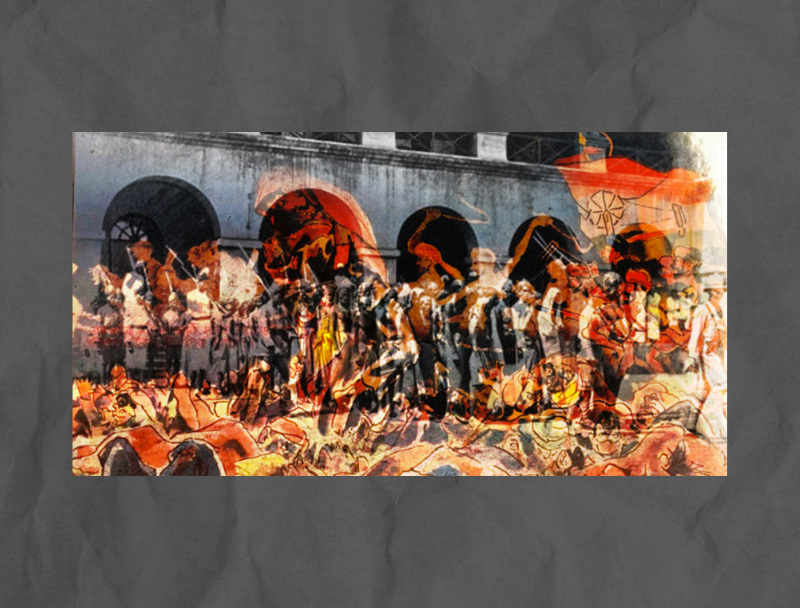
The Malabar Rebellion of 1921-1922, a significant historical event in early 20th-century India, continues to captivate the interest of the Mappila community in south Malabar. Through seminars, public meetings, and scholarly publications, the rebellion’s impact remains a subject of scrutiny and debate. While some view it as a communal revolt orchestrated by the Mappilas against the Hindu population, others recognize its significance as a major anti-British uprising after the 1857 revolt (Kurup, 1996). In this article, we delve into an objective and scientific evaluation of the rebellion’s consequences, shedding light on the tragic memories that persist in the minds of both Hindus and Mappilas.

The Malabar Rebellion of 1921-1922 unfolded against a backdrop of complex political dynamics and colonial rule. The British administration’s response to the rebellion differed significantly from their usual policies. In the affected villages of south Malabar, which were placed under Martial Law, a military strategy was adopted for recapture. Unfortunately, this approach resulted in the loss of valuable lives and deliberate destruction of properties (Kurup, 1996). Hindu nationalists and activists, including M.P. Narayana Menon and Brahmadattan Namboodiripad, also faced imprisonment during this tumultuous period. The tragic memories of the rebellion continue to haunt both Hindus and Mappilas. Meanwhile, the Indian National Congress, which initially led the Khilafat and Non-cooperation movements, distanced itself from the rebellion’s responsibility. However, the Mappilas perceived the Congress as having played a role in their political mobilization, ultimately leading to the rebellion and its brutal suppression by the British. Additionally, they believed that their Hindu brethren had betrayed them (Kurup, 1996). The failure of the Non-cooperation movement was also attributed to the rebellion’s impact.

In the southern Malabar region, tensions between Hindus and Muslims created a rift that distanced it from the national movement. The Mappilas, feeling estranged from the Congress, leaned toward the Muslim League. Even today, communal politics dominate this area. While the national movement elsewhere in India sparked social reforms and empowered women, here it remained weak. Orthodox traditions held sway, perpetuating gender inequality and limiting social progress. The Mappilas’ radical movements initially failed to improve their conditions, leaving women’s social mobility and property rights largely unchanged (Kurup, 1996).

In the backdrop of colonial Malabar, the agrarian landscape was rife with discontent, echoing the sentiments of peasantry enmeshed in the clutches of land monopolists and oppressive production relations (Tagore, 1937; Namboodiripad, 1943; Kunhikrishnan, 1993). Scholars such as Soumyendranath Tagore, E.M.S. Namboodiripad, and Conrad Wood elucidated the pervasive agrarian frustrations, highlighting practices like ‘Mlecharthu’ and ‘Tolichezhuthu’, emblematic of the deep-rooted evils of landlordism ( Kunhikrishnan, 1993). The peasantry, devoid of tenurial stability, fair rent, and transfer rights, found themselves at the mercy of a system designed to favor landlords and colonial authorities (ibid). This discontent brewed over the decades, finding expression in the Mappila uprisings of the 19th century, which were directed against both land monopolists and colonial rule (Logan, 1896). William Logan’s advocacy for statutory intervention and the subsequent demand for legislative reforms by intermediary cultivators reflected the simmering tensions within Malabar’s agrarian fabric (Logan, 1896; Kurup, 1981).

However, the enactment of the Malabar Tenancy Act fell short of addressing the plight of the actual cultivators, who continued to face threats of eviction, exploitative rents, and rural impoverishment (Govindan Nair, 1931). In response, a radical peasant movement took root, particularly in north Malabar, fueled by a new generation of nationalist leaders with a commitment to socialism and Marxism-Leninism (Namboodiripad, 1968; Kurup, 1978). Organizations like the All Malabar Karshaka Sangham emerged as formidable platforms advocating against landlordism, colonial oppression, and caste discrimination (ibid). This mobilization, centered around the plight of tenant-lease holders, heralded significant social transformations in north Malabar, injecting the national movement with a potent anti-imperialist fervor (ibid). The Malabar rebellion served as a rallying cry for peasant activists, with figures like K.A. Keraleeyan drawing inspiration from the heroic resistance of the Mappilas against British tyranny ( Kurup, 1978). Despite attempts to communalize the rebellion, these activists steadfastly rejected such divisive narratives, emphasizing its broader anti-colonial essence.

The rebellion, steeped in myths and legends, immortalized the Mappilas as symbols of anti-colonial resistance, inspiring subsequent generations in their quest for freedom (Government of Madras, 1948). However, the British authorities, wary of its anti-imperialist implications, resorted to suppression tactics, proscribing publications and stifling discussions related to the rebellion (Government of Madras, 1948). Despite such efforts to erase its memory from public discourse, the Malabar rebellion persisted as a potent reminder of the resilience and determination of those who dared to challenge colonial oppression (Hitchcock, 1925).

The Malabar rebellion, characterized by its profound impact on societal dynamics, challenged entrenched caste orthodoxy with unprecedented force. In Kumaran Asan’s literary masterpiece, the marriage of Savithri, a Brahmin lady, to a Pulaya agricultural laborer symbolized a direct assault on the rigid caste hierarchy (Kurup, 1996). This poetic portrayal, though not necessarily reflective of widespread reality, introduced the revolutionary notion of a casteless society, shattering traditional boundaries and sparking ideological transformations across Malabar (ibid). The rebellion thus served as a catalyst for reimagining social structures, dismantling age-old norms, and paving the way for a more egalitarian ethos.

A thorough analysis of the rebellion’s aftermath highlights its diverse impact, touching upon anti-colonial, anti-caste, and anti-feudal sentiments. Despite attempts by the dominant feudal class to depict it as a communal conflict, the rebellion was fundamentally driven by the desire to break free from colonial oppression (Kurup, 1996). It went beyond mere political disruption, sparking a profound reassessment of societal norms and power dynamics. There is no denying the rebellion’s significance as a crucial anti-British uprising in South India, leaving a lasting imprint on history.

References

  • Govindan Nair, C. (1931). The Malabar Tenancy Act 1929. Madras, India.
  • Government of Madras. Public (Gl) B. Dept. (1948). No. 1594, 2 July 1948. [Booklet]. Preface dated 16 August 1946.
  • Hitchcock, R. H. (1925). A History of the Malabar Rebellion: 1921. Superintendent, Government Press.
  • Kurup, K. K. N. (1978). The Kayyur Riot: A Terrorist Episode in the Nationalist Movement in Kerala. Cannanore, India: Sandhya Publications.
  • Kurup, K. K. N. (1981). William Logan: A Study in the Agrarian Relations of Malabar. Calicut, India: Calicut University.
  • Kunhikrishnan, V. V. (1993). Tenancy Legislation in Malabar. New Delhi, India.
  • Logan, W. (1896). Malabar Land Tenure: Report of a Special Commission. Madras, India.
  • Namboodiripad, E. M. S. (1943). A Short History of the Peasant Movement in Kerala. Bombay, India.
  • Namboodiripad, E. M. S. (1968). Kerala Yesterday, Today and Tomorrow. Calcutta, India.
  • Tagore, S. (1937). The Peasants Revolt in Malabar. Bombay, India.