

"Explore the rich tapestry of the Malabar region, where centuries of history, culture, and tradition come together.

Get In Touch

img

University of Calicut,
Edapally - Panvel Hwy, Thenhipalam,
Kerala 673635, India

Malabar History journal

  • Home
  • Malabar History journal
Blog Image

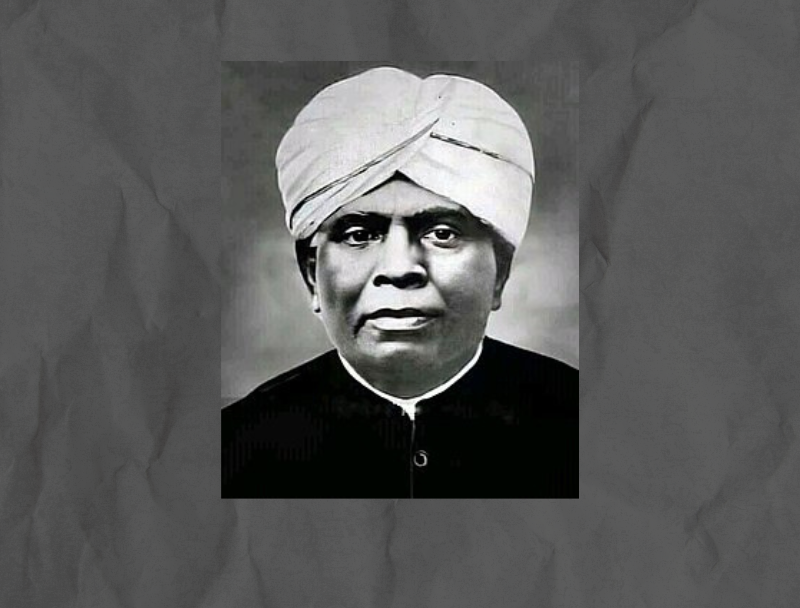
RARICHAN MOOPAN

The city of Calicut has changed significantly over time. In addition to being the administrative hub and capital of the Malabar district, it continued to be a significant seaport. When Europeans arrived, the influence of colonial modernity surpassed the medieval legacy of Calicut. Changes in society and the economy were also brought about by the Basel Evangelical mission. The mission’s economic endeavors gave rise to a new urban middle class.

Examining how different castes and religious communities changed during the 19th century as a result of the colonial political and economic system is necessary to comprehend how city life and public space changed. Since the Izhavas and Mappilas accounted for two-thirds of the total population of the district and municipality, any changes in the social fabric were important in several ways. The city saw the emergence of many new landlords and wealthy families after the fall of the Zamorin dynasty in the late 18th century. In one way or another, majority of them were previously connected to Zamorins. A class of professionals who worked in administrative offices, schools, and other establishments also arose alongside these elites. The ‘elites’ of colonial Calicut were therefore a new class that arose beyond the boundaries of the old caste system. The newly created circumstances facilitated the cash acquisition of property by rich non-caste groups, particularly Izhavas, and accelerated the selling of land to other people as well as government and nonprofit organizations. Later on, this new wealthy and affluent section was extremely important to the growth of the city’s culture and society.

Tiyya families and land transactions

Among the city’s Tiyyas, the most prominent landlords and affluent families were Pockenchery, Kunnikkal, Puthukkudi, Cherootty, Kattunkandi, Narakassery, Kallingal Madathil, etc. Some of the families were vydyas by occupation. According to numerous revenue records, Kallingal Madathil Rarichan Moopan, an Izhava landlord, owned vast amounts of land spread across the city. Interestingly, city administration land acquisition records also show that his family members benefited handsomely from government land acquisitions for public works projects in the late 19th and early 20th centuries.

Rarichan Mooppan as a prominent Tiyya landlord

Rarichan Mooppan was descended from a line of Thiyya landlords. On February 20, 1856, he was born in Kozhikode. He was a social reformer and married Mithavaadi Krishnan’s sister. He donated land and labored for the project of construction of Srikanteswara temple for the underprivileged. Following the Kozhikode Zamorin, the title of the richest family of Calicut was adorned by Kallingal Madam. Both the Kallingal Moopan family and Pullambil Moopan’s Thalassery family were involved in maritime commerce. Together with Moorkoth Kumaran, Rarichan Moopan worked on the Sri Kanteshwar temple where they donated land for a temple.

Rarichan Mooppan and Annie Hall

The property for the Annie Hall was purchased by Manjeri Ramaiyer from Kallingal Madathil Rarichan Moopan, a wealthy Kozhikode landowner. Later, Annie Hall’s house was converted into Besant Ashram. Rarichan Moopan owned the Kallingal Madathil family’s Kallingal Bhagavathi Temple, which later gained notoriety thanks to K N Ramadas Vydiar, as well as the Nalluveedu paramba, which was located across the street and where Manjeri Ramaiyer’s home was located. Dr. Besant had his room on top of Ramaiyer’s house. A close friend, acquaintance, and Theosophical Society member, Bishop C W Leadbeater, also resided at Besant Ashram. Leadbeater and Dr. Annie Besant wrote the book “Invisible Helpers” while they were residents of Besant Ashram. Col. James Wesley Hunt of Kozhikode is credited with founding the Theosophical Society. Rarichan Moopan dedicated Kozhikode Theosophical Lodge in 1903, and it is still there today.

Rarichan Mooppan and Calicut railway station

Kozhikode railway station, located in the Southern Railway zone’s Palakkad railway division, is an NSG-2 category Indian railway station. Kallingal Madathil Rarichan Moopan leased it to British Indian Railways for 99 years.

Rarichan Mooppan and social reform movement

Throughout the late 19th century, Mooppan and his family held most sway in the city. They participated extensively in the northern Malabar Tiyya reform movements. In the early 1900s, Mooppan and Mithawati C. Krishnan invited Sri Narayana Guru to celebrate the dedication of a new temple for Tiyyas in the city. He was the president of the Srikanteswara Temple construction committee of the Tiyya community. His contribution to the construction of the Srikanteswaram temple in Kozhikode was significant. In addition to a generous donation of 1,000 rupees for the construction, he also gave the temple land. Until his passing, he served as the president of Sri Katneshwara Temple.

Numerous Tiyyas, including wealthy families from the southern Malabar region, particularly from Thrissur, Kunnamkulam, and Kodungallur, are also observed to have migrated to the city in search of employment in the public and private sectors.

Visit of Prince of Wales and fencing of Mananchira

The initial fencing of the Mananchira Maidanam took place in 1906. This venture was supervised by Rarichan Mooppan. Meanwhile, the British Prince visited Kozhikode. To manage the specific event, a committee called the “Royal Visit Committee” was formed. With the help of the Rarichan moopan, this committee fenced the Mananchira fields. Additionally, the “Prince of Wales” was the new name for the grounds.

The British emperor George V decided to visit India in 1911 to conduct a royal inauguration. Delhi was the location he selected this for. The arrival of George V was celebrated as a holiday in British India. The festivities took place from December 7–12, 1911. The Kozhikkode town hall served as the venue for the frequent meetings to arrange events in Malabar. At the time, CA Innes served as the Malabar district collector. It is clear from the archives that all the Malabar ancestral houses were invited to this event in some way. The Kozhikkode Tiya Ambala Committee’s president, Rarichan Moopan, wrote a letter informing that they have called a special gathering of the Tiyyas. It will include a list of the emperor’s virtues. It also informed that the Temples would hold special pujas on designated days and that the temple and its surrounding areas would be illuminated.

Rarichan Mooppan’s legacy continues to inspire and influence social work and community development in Kerala. He is remembered as a visionary leader who fostered Tiyya mobility in Malabar and fought for social justice.

References

  • Jidhu, M. U. “Architecture in the Urban Space: The Life of the Elite in Colonial Calicut.” Proceedings of the Indian History Congress, vol. 75, 2014. JSTOR, http://www.jstor.org/stable/44158442.
  • Narayanan, M. G. S. Calicut: The City of Truth Revisited. University of Calicut, 2006.
  • Seluraj, T. B. Kozhikkodinte Paithrikam. Calicut: Mathrubhumi Books, 2011.