


"Explore the rich tapestry of the Malabar region, where centuries of history, culture, and tradition come together.

Get In Touch

img

University of Calicut,
Edapally - Panvel Hwy, Thenhipalam,
Kerala 673635, India

Malabar History journal

  • Home
  • Malabar History journal
Blog Image

Portuguese Atrocities in Malabar

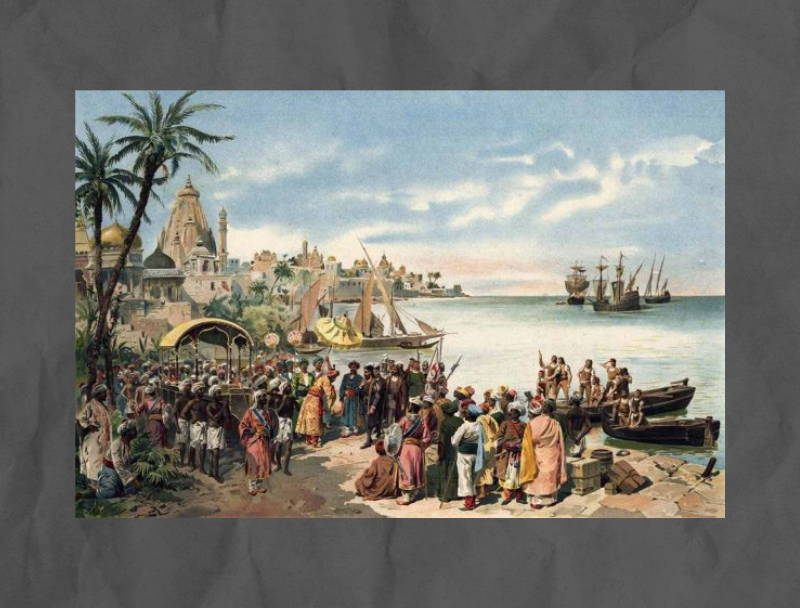
The arrival of the Portuguese, became a misfortune on the sea for the Muslim merchants of Malabar, both indigenous and foreign. To establish a monopoly over spice trade, and Portuguese State (Estado da India), the Portuguese implemented various strategies, often violent and harsh toward the natives. In 1502, the Portuguese deployed specific vessels in the Indian Ocean to chase and block all other ships from trading with the Malabar Coast. Zainudin Makhdum noted that advent of Portuguese in Malabar led to the decline of Calicut, which lost its significance due to disruptions in trade journeys created by the Portuguese.

After their arrival, the Portuguese realized they needed to stop Muslim merchants and their trade routes to Arabia/Red Sea. When the Zamorin objected, they began to interfere in all the commercial activities involved by the Muslim merchants. They even approached the Zamorin, requesting him to halt Muslim trade voyages, promised him compensation even for the loss. Initially, Zamorin welcomed them as merchants, providing arrangements for selling their goods and buying spices from local traders. However, the Portuguese soon discovered that there was little demand for their products and they were offered low prices. Additionally, Muslim merchants had already collected spices before the Portuguese arrival, forcing them to pay high prices to purchase from them. Suspecting a conspiracy between the Gujaratis and Muslims against them, the Portuguese attempted to forcibly collect spices from various sources, leading to significant violence and conflict.

The violence and atrocities committed by the Portuguese both on land and at sea, along with their subsequent attack on the Zamorin’s palace, turned the Zamorin entirely against them. As a result, Portuguese allied with the kings of Cannanore and Kochi to collect spices. The king of Kochi even provided land for the Portuguese to build a fortress, which served as a base for their operations. The Portuguese even appealed to the king of Kochi to expel the Muslims from his territory, arguing that their income was minimal and that the Portuguese would generate much more revenue for Kochi. However, the king responded that the Muslims could not be expelled, as they had been his subjects for generations and played a significant role in the country’s development and prosperity. Additionally, local merchants had already received advances from Muslim traders for the continuing year, prevented them from selling spices to the Portuguese. Realising the fact that they could not easily remove the Muslim merchants, the Portuguese resorted to various methods to collect spices, along with continuing their acts of violence.

The atrocities committed by the Portuguese varied significantly. In 1500, they seized a Muslim vessel at Calicut port and robbed it, which sparked violence. While Pedro Alvarez Cabral was in Calicut, he set fire to ten ships in the harbour, destroyed parts of the Zamorin’s palace, and bombarded the city, then moved to Pantalayani. When Vasco da Gama came to Malabar second time in 1502, he robbed and set fire to a ship near Cannanore that was returning from Mecca. This ship belonged to the brother of Shabantra Koya, whom Gama had viewed as an enemy since his first visit. The ship was carrying 300 pilgrims along with merchandise. When the Zamorin attempted to negotiate with Gama, he demanded the expulsion of all Muslims from Calicut, including both Mappilas and foreign merchants. When his demand was refused, he opened fire on the city, causing the houses of the Mukkuvas to burn and destroyed the warehouses in the bazar. Around this time, a fleet of 24 ships arrived from Mangalore carrying rice, which Gama seized along with their crews, totalling around 800 people, and sailed to Kochi. Thus, the Portuguese violence against Calicut and its merchants continued unabated.

In 1510, during the leadership of Afonso de Albuquerque, the Portuguese entered the Zamorin’s palace and looted it. Later, at Ponnani, they set fire to around 50 fishing boats and killed 70 Muslims. They captured Muslims, enslaved them, and sold them. The Portuguese sailed to various ports in Malabar and along the western coast of India, reaching as far as the Arabian coast. There, they would lie on the sea in their ships to seize any incoming Muslim vessels. Through these actions, they accumulated both wealth and prisoners, who forcibly converted to Christianity.

As a result, the war dragged on, weakening the Muslims. The old Zamorin passed away, and the new king determined that establishing peace with the Portuguese was the best course of action. Consequently, a treaty was formed in 1513, allowing the Portuguese to build a fort in Calicut under the condition that their Muslim subjects could undertake trade voyages to Arabian and Red Sea ports with proper passes. This arrangement took place between 1514 and 1515. Muslims began their trade voyages using the passes. However, the Portuguese refused to permit further voyages, aiming to monopolise the trade of pepper and dried ginger. They started seizing any ships carrying these two commodities, even in small quantities, including smaller vessels. In 1537, an incident occurred that Portuguese killed Kutty Ibrahim Marakkar and his crew for sending a ship carrying pepper and ginger to Jeddah without a license. People became reluctant to obtain passes, and anyone who attempted to trade was killed by the Portuguese. In 1539, another incident occurred when Ali Ibrahim Marakkar, along with Faqih Ahmad Marakkar and others, set out on a journey to Ceylon. However, the Portuguese learned of their plans, killed them, and seized their ships.

Initially, Portuguese honored the licenses they issued, providing security for ships and allowing trade to proceed without interruption. However, from 1558 onward, they began issuing licenses but would stop ships at sea, capturing and looting them regardless of whether the crew were Muslims or non-Muslims. Their methods of torture included hacking, throwing bound individuals overboard, and forcing conversions to Christianity. At times, they would suddenly attack and fire upon certain areas, as they did in 1573-74 when they set Chaliyam and Parappanangadi ablaze. In 1578, they captured 50 Muslim ships of varying sizes and took about 3,000 people as prisoners. They also seized Gujarati ships traveling from Surat to Jeddah; burned Adilabad port, which housed many vessels belonging to residents of Kannur and Dharmapattanam; and set fire Kayalpattanam port, which was dominated by Muslim merchants of Malabar.

Although Portuguese allowed the Muslim merchants to trade with passes, they restricted trade to only those commodities in which the Portuguese had an interest. Initially, the Portuguese monopolised high-profit items like pepper and ginger, later cinnamon, cloves, and other profitable goods. Eventually, Muslims were prohibited from conducting trade voyages to the Arabian coast, Malacca, Sumatra, and other regions also. As a result, their trade activities diminished, forcing them to engage in petty trades such as areca, coconuts, and cloth. They became confined to coastal trade routes, such as those to Gujarat, Konkan, Kayalpattanam, and the Coromandel coast. The Portuguese built numerous fortresses to control the coasts, the interior regions, thereby effectively blocking the movement of goods. Reports indicated that in 1507, eight vessels were deployed to guard the Indian coast against other merchants.

Thus, their atrocities were varied and persisted throughout 16th century, initially targeting Muslim merchants to control Calicut-Red Sea trade and later to dominate Indian ocean trade.

References

  • K.V. Krishna Ayyar. The Zamorins of Calicut: From the Earliest Times Down to A.D. 1806. Calicut: University of Calicut, 1999.
  • K.M. Panikkar. Malabar and The Portuguese. Bombay: D.B. Taraporevala Sons & Co, 1929.
  • K.S. Mathew. “Portuguese Trade with India and the Theory of Royal Monopoly in the Sixteenth Century.” Proceedings of the Indian History Congress, Vol. 40, 1979.
  • Quazi Muhammed bin Abdul Azeez. Fathuhul Mubeen, Malayalam trans. Prof. Mankada Abdul Aziz. Calicut: Alhuda Book Stall, 1996.
  • Shaykh Zainuddin Makhdum. Tuhfat al-Mujahidin: A Historical Epic of the Sixteenth Century, trans. S. Muhammad Husayn Nainar. Calicut: Other Books, 2005.