
"Explore the rich tapestry of the Malabar region, where centuries of history, culture, and tradition come together.

Get In Touch

img

University of Calicut,
Edapally - Panvel Hwy, Thenhipalam,
Kerala 673635, India

Malabar History journal

  • Home
  • Malabar History journal
Blog Image

Pinarayi Conference

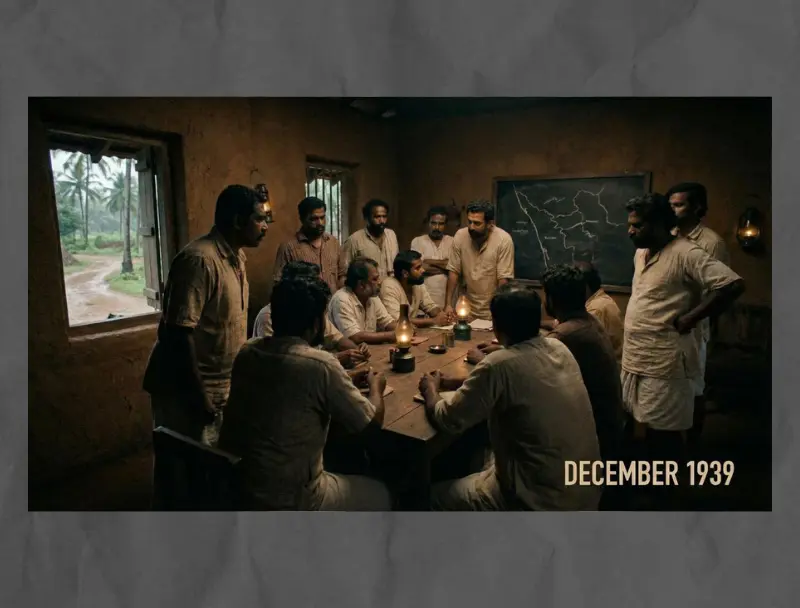
The Pinarayi Conference refers to a secret meeting held in December 1939, of the Kerala Congress Socialist Party at Pinarayi, located in the present-day Kannur district of Kerala. At the meeting, the Congress Socialist Party and a British-outlawed Communist group merged, paving the way for the formation of the Communist Party in Kerala.

Background

The peasant and labour movements of the 1930s and the growing discontent with the compromising nature of the social leadership of the Congress party, led by M.K. Gandhi contributed to the emergence of communism in the Kerala state. In 1934, people with communist orientations organized the Congress Socialist Party within the Congress Party and C. K. Govindan Nair was selected as its secretary.

After the First World War, in 1940, the Congress Party expelled members of the Congress Socialist Party because it was believed that their ideas interfered with the party’s operations. In December 1939, the expelled members met at a secret enclave at Parapram, Pinarayi, near Thalassery in the present-day Kannur district of Kerala. The Pinarayi village in Parappuram was selected for conducting the party conference as it was a strategically important place —an isolated area surrounded by rivers with no proper streets and a place with the presence of a large number of communist ideologues. In order to maintain the secrecy of the conference, a meeting of the radical teachers union was held at R.C. Amala U.P. School, led by Pandyala Gopalan Master, was held in a nearby place.

Twenty-eight prominent leaders of the Congress Socialist Party participated in the conference, namely, E.M.S Nambuthiripad, P. Krishnapillai, K. Damodaran, P. Narayanan Nair, K.K. Varier, A.K. Gopalan, S. Namboothiri, V.V. Kunhambu, Chandroth Kunhi Raman Nair, Vadavathi Krishnan, Pinarayi Krishnan Nair and others. The Congress Socialist Party members joined the existing Communist faction secretly at the meeting as the latter, which consisted of only four members, was banned by the British government. The newly formed Communist Party decided to intensify the fight for freedom through popular direct action during times of war.

On January 26, 1940, the party declared its public existence through a huge wall-writing campaign.

References

  • T. M. Thomas Isaac. The National Movement and the Communist Party in Kerala. Social Scientist, Vol. 14, No. 8/9 (Aug.–Sep., 1986), pp. 59–80. Accessed on 21.03.2023 from

    https://www.jstor.org/stable/3517435
  • T. A. Mohamed. (2010–2011). Leftist Movements and the Mappila Muslim. Proceedings of the Indian History Congress, Vol. 71.
    http://www.jstor.org/stable/44147541
  • M. Babitha. (2021). Historicising Pinarayi Parappuram Communist Movement. International Journal of English Literature and Social Sciences. Accessed on 23.03.2023 from

    https://ijels.com/upload_document/issue_files/8IJELS-104202156-Historicising.pdf
  • Communist Movement in Kerala. Accessed on 21.02.2023 from

    https://www.midukkantony.com/post/communist-movement-in-kerala