


"Explore the rich tapestry of the Malabar region, where centuries of history, culture, and tradition come together.

Get In Touch

img

University of Calicut,
Edapally - Panvel Hwy, Thenhipalam,
Kerala 673635, India

Malabar History journal

  • Home
  • Malabar History journal
Blog Image

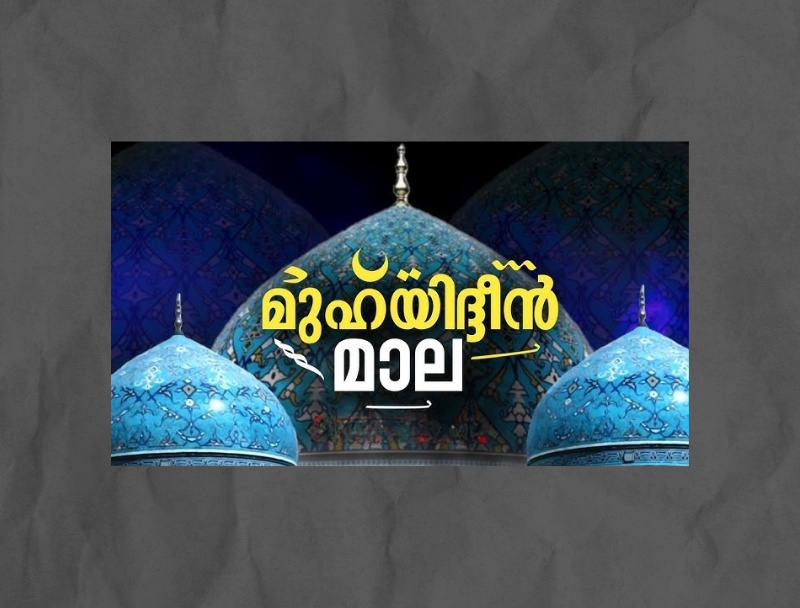
Muhyiddin Mala: A Beacon of Mappila Heritage

Muhyiddin Mala, composed by Qadi Muhammad of Calicut in 1607 AD, is the earliest extant work in Arabi Malayalam, a hybrid language blending Arabic and Malayalam. Consisting of 155 couplets, the mala celebrates the virtues of Shaikh Muhyiddin Abdul Qadir al-Jilani, a renowned Sufi leader. Qadi Muhammad, an eminent Islamic scholar and member of the prestigious Qadi family of Calicut, held the position of Qadi, or chief Muslim jurist, of Calicut during his lifetime. Despite the paucity of information on Arabi Malayalam literature predating Muhyiddin Mala, scholars believe that the language had already established itself as a robust medium of literary expression well before the seventeenth century (Abu, 1970; Moulavi and Kareem, 1978). The sophisticated use of Arabi Malayalam in Muhyiddin Mala indicates a mature literary tradition, and its composition in 782 of the Malayalam Era (1607 AD) is well-documented (ibid). The absence of printing before the late nineteenth century likely contributed to the loss of many early works, yet many anonymous old poems suggest a rich but undocumented literary culture (ibid).

Significantly, the textual fabric of Muhyiddin Mala itself serves as proof of the existence of Arabi Malayalam literature predating it. Scholars argue that its highly developed use of Arabi Malayalam in both orthography and lexis shows that it was written at a time when the language had already established itself as a full-fledged medium of literary production (Abu, 1970; Moulavi and Kareem, 1978; Vallikkunnu, 1999). This work is often showcased as the microcosm of the Mappila literary tradition, embodying the essential characteristics of Arabi Malayalam poetics. Balakrishnan Vallikkunnu (1999) highlights Muhyiddin Mala as the prototype of Mappila songs, using it to codify the common characteristics of Mappila poetry. Its status as the earliest known work with known authorship and date, coupled with its value as a typical Mappila song written in a highly developed form of Arabi Malayalam poetics, earns Muhyiddin Mala a place of prominence in Mappila literary culture.

The composition of Muhyiddin Mala by Qadi Muhammad ibn Abdul Azeez in 1607 AD is deeply rooted in the social and historical context of seventeenth-century Malabar. Qadi Muhammad, an eminent Islamic scholar during the Portuguese occupation of the Malabar coast, composed this devotional ballad to extol the virtues of Shaikh Muhyiddin Abdul Qadir al-Jilani, a revered Sufi leader. This period was marked by significant upheaval as the Mappila Muslims, who controlled trade and commerce, were severely impacted by European colonial forces (Dale, 1980; More, 2011). The Mappila ulama, including Qadi Muhammad, played a crucial role in the anti-colonial struggles, providing ideological support through their writings. Qadi Muhammad’s other notable work, “Fathul Mubeen,” an anti-Portuguese narrative poem, exemplifies this dual role of spiritual and political activism among the ulama of the time. The composition of Muhyiddin Mala, in this context, was not only a devotional act but also a unifying effort to bring together fragmented Muslim groups under the Qadiri Sufi order amidst internal Sufi rivalries and external colonial pressures (Moulavi and Kareem, 1978; Mandalamkunnu, 2008).

Muhyiddin Mala, consisting of 155 couplets, fervently celebrates the virtues and miracles of al-Jilani, drawing from various Islamic texts, including al-Jilani’s own poems and biographies (Kuzhiyan, 2015). The poem’s grand style and intricate use of Arabi Malayalam reflect a mature literary tradition, underscoring its role as a pioneering work in Mappila literary culture. The mala begins with customary invocations, delaying the mention of al-Jilani’s name until his majesty and supremacy are vividly portrayed (ibid). The text is interwoven with prayers and supplications, reinforcing its performative nature intended for recitation or singing. This performative aspect, often overlooked in literary analyses, is crucial for understanding the social life and sustained popularity of Muhyiddin Mala among Mappilas. Subsequent malas in Arabi Malayalam heavily drew upon this seminal work, cementing its place as a cornerstone of Mappila literary tradition. Thus, Qadi Muhammad’s Muhyiddin Mala not only set a precedent for the mala genre but also exemplified the interconnectedness of spirituality and socio-political activism in seventeenth-century Malabar (Abu, 1970; Vallikkunnu, 1999).

The mala, written in 1607, predates the classic Malayalam devotional epic Adhyatma Ramayanam by Thunchattu Ezhuthacchan, thus establishing its precedence in Malayalam literary history. Scholars like Abu (1970), Moulavi and Kareem (1978), and Vallikkunnu (1999) highlight how Muhyiddin Mala set a precedent for subsequent Mappila literature, blending Dravidian and Arabic influences and rejecting the heavily Sanskritized Manipravalam tradition dominant in Kerala’s upper-caste Hindu literature.

Balakrishnan Vallikkunnu’s analysis of Muhyiddin Mala demonstrates its distinctive parallel aesthetics by quantifying its linguistic and metrical features. Out of 582 words in the main body of the mala, 202 are Arabic, showing a significant Arabic influence while retaining a predominance of Malayalam (Bhasha) lexicon. The metre of the poem, resembling the Dravidian kakali and the Arabic khafif, further illustrates this hybridization. Kakali, popularized by Ezhuthacchan, consists of lines with four feet of five matras each, while khafif in Arabic metrics comprises six feet with the formula faa’ilaatun mustaf’ilun faa’ilaatun, repeated twice. This unique fusion of Dravidian and Arabic elements not only highlights the distinct identity of Mappila literature but also underscores its role as a parallel literary movement, countering the elite Manipravalam tradition and emphasizing the Islamic identity of the Mappila community through its religious themes and performative practices (Kuzhiyan, 2015).

The Muhyiddin Mala, a seminal work in Mappila literature, has transcended its literary significance to become a central piece in the devotional practices of Kerala Muslims. Traditionally, Mappilas would recite or sing the Muhyiddin Mala in their homes daily, particularly after the sunset prayers (maghrib). This practice underscores the communal and familial integration of the mala into Mappila religious life, with its recitation being a shared practice that not only fostered religious devotion but also acted as a vehicle for the transmission of cultural and religious values across generations (Moulavi and Kareem, 1978). The educational value of the Muhyiddin Mala was such that a Muslim girl’s ability to recite it was often cited as an important qualification during matrimonial proposals, highlighting the text’s role in social and cultural contexts (ibid).

The Muhyiddin Mala’s centrality to domestic devotional piety is further illustrated by its widespread use among Mappila women. Musthafal Faizy (2008) notes that women would sing the mala seeking blessings, such as recovery from illnesses and ease during childbirth, and it was even sung during weddings. Despite being a predominantly male literary domain, the Muhyiddin Mala resonated deeply with women, making the ability to recite it a significant marker of piety and education for Mappila girls (Faizy, 2008; Randathani, 2007). Moreover, expatriate Mappilas in the Gulf countries also formed groups to recite the Muhyiddin Mala, showcasing its far-reaching impact and the preservation of cultural identity among the diaspora (Faizy, 2008). The mala’s survival and continuous relevance, despite the historical absence of printed copies, attest to its deep-rooted significance in Mappila culture (Rahman, 2008).

Beyond its performative aspect, the Muhyiddin Mala and other devotional narratives are believed to carry significant spiritual benefits, or baraka. Baraka, often translated as divine blessings, is integral to understanding the piety embedded in Mappila literary culture (Katz, 2007). Reciting the Muhyiddin Mala was seen as a virtuous act that brought religious merit (thawab) and divine blessings, fostering a deep spiritual connection with revered Islamic figures (Abu, 1970; Faizy, 2008). This recitation was transformative, cultivating pious dispositions among performers and listeners alike. The preservation and circulation of malas in prayer books (sabeenas), commonly found in households and sold near Sufi shrines, further attest to the embeddedness of these texts in the religious life of the Mappilas (Kareem, 1983; Rahman, 2008). Rahman (2008) vividly recalls how these prayer books, which contained a repertoire of devotional literature, were central to fostering literacy and a shared religious identity within Mappila households, thus underscoring the Muhyiddin Mala’s role in creating and sustaining Mappila literary formation.

In conclusion, the examination of the alleged decline in the performance of malas among Mappilas prompts a nuanced understanding that extends beyond the influence of Islamic reformist activism. While acknowledging the potential impact of such propaganda, it is imperative to consider broader societal changes and shifting priorities as significant factors contributing to the diminishing practice of not only mala recitation but also other traditional religious rituals like Quran recitation and ritual prayers (Faizy, 2008).

Furthermore, it is essential to recognize the enduring significance of devotional practices like the recitation of the mala in shaping Mappila religious life and cultural identity. Arabi Malayalam sabeenas remain central to Islamic devotional piety, persisting in Mappila households and being actively engaged in on various occasions, both individually and collectively. Despite contemporary challenges, these practices continue to play a vital role in religious self-fashioning and cultural preservation, underscoring their resilience and enduring importance in the fabric of Mappila identity and religious expression (Faizy, 2008; Rahman, 2008). Thus, while acknowledging the complexities of modernity and evolving societal dynamics, it is evident that the significance of devotional practices like the mala transcends temporal boundaries, remaining integral to the rich tapestry of Mappila heritage and religious tradition. The enduring popularity of the Muhyiddin Mala underscores its significance not only as a literary masterpiece but also as a cultural and religious artifact deeply embedded in the social fabric of Kerala’s Mappila community. Through its rich blend of Arabic and Malayalam, its poetic brilliance, and its spiritual resonance, the Muhyiddin Mala continues to serve as a beacon of Mappila identity, faith, and tradition, connecting generations past and present in a shared heritage of devotion and piety.

References

  • Abu, O. (1970). Arabi Malayala Sahitya Charithram. Kottayam, India: Sahitya Pravarthaka Co-Operative.
  • Dale, S. (1980). Islamic Society on the South Asian Frontier: The Mappilas of Malabar, 1498-1922. Oxford, UK: Clarendon Press.
  • Faizy, K. V. A. (2008). Manqus Mawlid: Paribhasha-Vyakhyanam (The Manqus Mawlid: Translation and Commentary). Kottakkal, India: Barakath Bookstall.
  • Faizy, M. (2008). “Muhyiddin Mala: Thaswavvufinte Kavyavishkaram (Muhyiddin Mala: Sufism finds poetic expression).” In Z. Mandalamkunnu (Ed.), Muhyiddin Mala: Charithram, Padham, Padhanam (pp. 65-73). Thrissur, India: Kaizen Books.
  • Kareem, C. K. (1983). Muslim Samudayavum Samskaravum (Muslim Community and Its Culture). Thiruvananthapuram, India: Charithram Publications.
  • Katz, M. H. (2007). The Birth of the Prophet Muḥammad: Devotional Piety in Sunni Islam. London, UK: Routledge.
  • Kuzhiyan, M. A. R. (2015). Poetics of Piety: Genre, Devotion, and Self Fashioning in the Mappila Literary Culture of South India (Doctoral dissertation). Department of English Literature, School of Literary Studies, The English and Foreign Languages University, Hyderabad, India.
  • Mandalamkunnu, Z. (2008a). “Muhyiddin Mala: Vivadangalil Mayunna Sathyangal (Muhyiddin Mala: The truths lost in controversies).” In Z. Mandalamkunnu (Ed.), Muhyiddin Mala: Charithram, Padham, Padhanam (pp. 39-44). Thrissur, India: Kaizen Books.
  • Mandalamkunnu, Z. (2008b). “Qadi Muhammad: Athmajnaniyaya Viplavakari (Qadi Muhammad: A Sufi revolutionary).” In Z. Mandalamkunnu (Ed.), Muhyiddin Mala: Charithram, Padham, Padhanam (pp. 20-26). Thrissur, India: Kaizen Books.
  • More, J. B. P. (2011). Origin and Early History of the Muslims of Keralam, 700 A.D.-1600 A.D. Calicut, India: Other Books.
  • Moulavi, C. N. A., & Kareem, K. K. M. A. (1978). Mahathaya Mappila Sahitya Parambaryam. Calicut, India: Published by the Authors.
  • Rahman, M. A. (2008). “Muhyiddin Mala: Oru Prathibhodha Kavyam (Muhyiddin Mala: A counter-poetics).” In Z. Mandalamkunnu (Ed.), Muhyiddin Mala: Charithram, Padham, Padhanam (pp. 32-38). Thrissur, India: Kaizen Books.
  • Randathani, H. (2007). Mappila Muslims: A Study on Society and Anti-Colonial Struggles. Calicut, India: Other Books.
  • Vallikkunnu, B. (1999). Mappilappattu: Oramukha Padhanam (Mappila Songs: An Introduction). Calicut, India: Poomkavanam Publications.