


"Explore the rich tapestry of the Malabar region, where centuries of history, culture, and tradition come together.

Get In Touch

img

University of Calicut,
Edapally - Panvel Hwy, Thenhipalam,
Kerala 673635, India

Malabar History journal

  • Home
  • Malabar History journal
Blog Image

Moyinkutty Vaidyar

Ottu Paarakandy Alungalkandy Moyinkutty Vaidyar (1852–1892) also known as Moyinkutty Vaidyar is one of the most renowned poets of the Mappila Pattu, a genre of songs in the Malayalam language.

Biography

Moyinkutty Vaidyar was born in 1852 to a poet and physician Unni Muhammad Vaidyar and Kunjamina in Kondotty of Malappuram district of Kerala. His was a family of physicians who moved from Ottuparakkal of Thrissur district to Kondotty. He learned Malayalam, Tamil, Arabic and also Sanskrit language to learn Ayurveda. He began to write poems at a very young age. Initially, his father offered him suggestions to improvise poems. At the age of 16, his first writing ‘Husnul Jamal-Badarul Muneer’(1872) was published. The poem spoke of eternal love. At the age of 27, he wrote a poem Uhud Pada about the battle of Uhud in Islamic history.

He married Thalayanchery Fathimakkutty who also had a flair for poetry. They had three children, the eldest Unni Muhammad died at a young age. His second son Ahammed Kutty Vaidyar became a physician and a poet of the Mappila pattu. Kunjamina, his only daughter was also an admirer of songs.

He died on 12 March 1892.

Major Contributions

Moyinkutty Vaidyar was a famous poet of the Mappila pattu genre of songs in the Malayalam language. His pen name was Fayyal Thabib (the son of a physician) or Thabib Fayyal. At the age of sixteen, he composed a romantic epic ‘Husnul Jamal-Badarul Muneer’(1872), a fictional love story between Prince Badarul Muneer, the son of the King Mahazin of Ajmer and Husnul Jamal, daughter of his minister Mazmir. He also wrote war songs, the most popular of which was Badar Padappattu (1876) based on the Battle of Badr of the Prophet Muhammad. When he wrote Badar Padappattu, the British rule of the Malabar province had completed three-quarters of a century and was replete with struggles between the Mappila Peasants and landlords supported by the British government. At this juncture, Vaidyar’s Padappattu kindled the interests of poor peasants against landlordism and British colonialism. His other work Uhud Padappattu(1878) was about the Battle of Uhud in Islamic history, and Malappuram Padappattu described the difficulties and struggles of peasants in Malappuram in the 18th and 19th centuries. His other works are Salaseel (a poem about Salaseel, the son of a Woodcutter), Elippada (The Battle of Rats was based on a tale in Panchatantra), Ottakaththinteyum Maaninteyum Katha (The story of the camel and the deer), Bethilappatu (A song about the customs of using Betel leaf), Hijra (1892) talked of the life of Prophet Muhammad and Kilathimala was a song of praise of the Prophet Muhammad’s grandson Hussein, Moolapuranam presented the situations that arise after the marriage of Prophet Muhammad’s daughter Fatima with his nephew Ali. Theevandichinth, Swaleeqath, Mullappoocholayil and Karamath Mala are among his other works.

His songs were used in Malayalam films such as Olavum Theeravum (1960), Choondakkari (1977), and 1921 (1988).

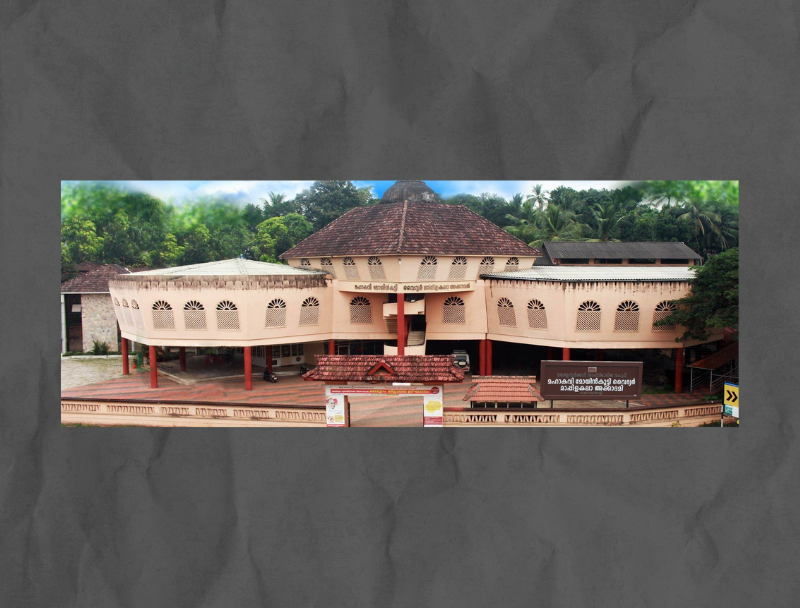
A cultural centre was built in Kondotty of Malappuram district on 13 June 1999 to preserve his legacy.

References

  • Bava, K. (2015). Works of Moyinkutty Vaidyar: Language and Discourse [Thesis, Department of Malayalam and Kerala Studies, University of Calicut].
  • Basheer Chungathara. (2010). Isal Chakravarthy Moinkutty Vaidyar. Kerala Sahitya Academy.
  • Shruthi Subrahmanyan. (2015). Mahakavi Moinkutty Vaidyar. Kerala Bhasha Institute.
  • Moyinkutty Vaidyar. (2022, December 21). In Wikipedia.
    https://en.wikipedia.org/wiki/Moyinkutty_Vaidyar
  • Classical Works of Mahakavi Moinkutty Vaidyar. Mahakavi Moinkutty Vaidyar Mappila Kala Academy. Accessed on 03.01.2023 from
    https://mappilakalaacademy.org/?page_id=1348&lang=en