
"Explore the rich tapestry of the Malabar region, where centuries of history, culture, and tradition come together.

Get In Touch

img

University of Calicut,
Edapally - Panvel Hwy, Thenhipalam,
Kerala 673635, India

Malabar History journal

  • Home
  • Malabar History journal
Blog Image

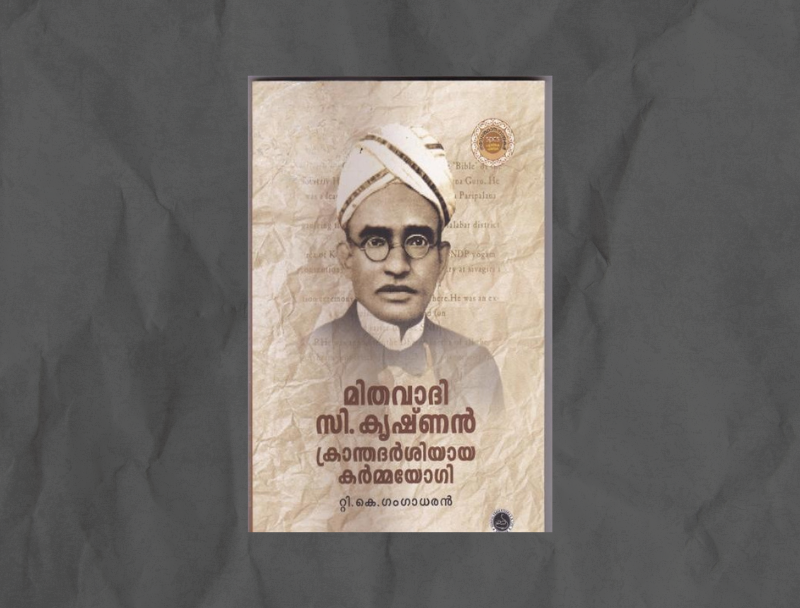
Mithavadi’s Impact: Unraveling Malabar’s Print Culture and Public Sphere

The late 19th and early 20th centuries marked a transformative period in Malabar’s socio-political landscape, where print culture, journalism, and the burgeoning public sphere converged (Korath, 1985; Regional Record of Survey Committee, 1970; Bayly, 1999). This historical era provides a nuanced understanding of how these interwoven factors played a pivotal role in sculpting Malabar’s destiny.

The emergence of a public sphere in Malabar during the late 19th century reflected broader trends in colonial India. Influenced by gatherings like the 1884 Indian Association meeting in Calcutta, attended by luminaries such as Dadabai Navaroji and Mahadeva Govinda Ranade, Malabar became integrated into the expanding Indian public space (Korath, 1985). This evolving public sphere, shaped by the ideals of the modern educated class, became a platform for rational deliberation on societal issues, fueled by the pivotal role of English education and the quest for independence (Regional Record of Survey Committee, 1970).

The middle class in Malabar emerged as a potent force, buoyed by colonial symbols like English education and the burgeoning print culture (Sarkar, 1997; Bhattacharya, 2005). In British-ruled Malabar, the freedom for lower classes to progress through education and employment contrasted sharply with the challenges faced in the Princely state of Travancore (Priyadarshanan, 1999; Kunhappa, 1973). Pioneers of newspapers like Kerala Pathrika and Kerala Sanchari, constituting the intellectual class, played a pivotal role in reshaping tradition through colonial symbols (Ganesh, 2000).

The advent and development of printing in the late 19th century laid the groundwork for the evolution of print culture and journalism in Malabar. ‘Print culture’ significantly promoted the development of community identities and the formation of a public sphere (Arunima, 2006). Newspapers like Kerala Pathrika, Kerala Sanchari, and later, Mithavadi, became powerful mediums intertwining journalism with advocacy.

In the late 19th century, Malabar witnessed the rise of a public sphere woven from the threads of community and religion, fueled by the dissemination of diverse Malayalam publications. Drawing from Habermas’s conceptualization (1991), a public sphere, originally an 18th-century European phenomenon, found its roots in Kerala almost a century later, centering on public interest (Devika, 2007: 6).

The articulation of public interest in Malabar added a distinctive twist to the development of community identities while fostering the growth of the public sphere. Key discussions within this emerging sphere revolved around nationalism, the tenancy/Kudiyan Bill, events like Janmiyum Kudiyanum (1923) and Congress Karyam (1923), the 1921 Mappila rebellion, as well as caste dynamics and Kshethra Pravesanam (temple entry).

Unlike the patriarchal and bourgeois nature of the European public sphere (Babu, 2022) during its transition from the literary to the political realm, Kerala’s version was deeply intertwined with the conscience of its diverse communities. Here, the community’s conscience played a pivotal role in determining which ‘public’ concerns the public sphere should prioritize. This resulted in a triangular sensibility or consciousness, encapsulating the dimensions of religion, caste, and class. In essence, the early stages of the Malabar public sphere resonated with a distinct community inflection, with ‘publics’ often circumscribed by their community spirit, sometimes operating outside the conventional framework of reason (ibid). This unique interplay of community, religion, and discourse set the stage for the multifaceted evolution of the Malabar public sphere, becoming an integral part of the socio-political landscape alongside the dynamic forces of print culture, journalism, and advocacy (ibid).

Challenges and the Triumph of Kerala Pathrika

Kerala Pathrika, founded in 1884, emerged as a fearless advocate for public opinion during a time when the government sought to control the press. The Press-Book Registration Act brought printing presses under government control, empowering authorities to punish editors, confiscate publications, and control the dissemination of news (Ramakrishnan, 2000). Editor Kunhirama Menon’s courageous stance, which led to a historic incident where he had to pay a fine of Rs.51 for criticizing the government, marked a rare penalization of a Malabar editor for exercising press freedom (Ramakrishnan, 2000).

Under Kunhirama Menon’s editorial leadership, Kerala Pathrika transcended traditional news reporting, fearlessly attacking the highhandedness of District Police Superintendent Faucet. The newspaper championed causes such as the tenancy movement, marriage reforms, and criticized sectarian institutions. Its editorial stance even extended to resisting the perceived double-dealing of the British in the Crawford case. To Kunhirama Menon, the press was not merely an organ for spreading news but an institution of the public itself, aligning with Jurgen Habermas’s notion of the press as a vital component of the public sphere (Joseph, 2008). The challenges faced by Kerala Pathrika in navigating governmental restrictions set the stage for the subsequent emergence of Mithavadi. The bold and unyielding pursuit of press freedom by Kerala Pathrika demonstrated the significance of a free and independent press in challenging authority and shaping public opinion (ibid).

Mithavadi: Advocacy and Upliftment Beyond Malabar

From its inception in 1913, Mithavadi, under the editorial guidance of Adv. Krishnan, championed the cause of ‘Thiyyathwam’—the state of being Thiyya (SwamiBrahmavruthan, 1971). Krishnan, with unwavering commitment, resisted other movements, providing a narrow yet intense focus on the upliftment of the Thiyya community (Mithavadi, 1913). In the second issue, Mithavadi portrayed the plight of Thiyyas in the early 20th century, highlighting the stark contrast between urban and rural Thiyyas. While urban Thiyyas were educated, united, and prosperous, their rural counterparts faced societal challenges due to untouchability.

Advocate Krishnan urged Thiyyas to actively contribute to their community’s upliftment, emphasizing unity and independence due to their lack of representation in legislative bodies (K R Achuthan). He organized impactful conventions, including the Kochi Ezhava Samajam meeting in Trichur in April 1916, receiving praise in English and Malayalam media (Mithavadi, 1916). Yogakshemam also commended Krishnan for promoting justifiable actions by communities (Mithavadi, 1916). In 1922, Krishnan boldly highlighted Thiyyas’ underrepresentation, calling for independence despite being 40% of Malabar’s Hindu population (MalayalaManorama, 1922). He utilized various platforms to advocate for Thiyya rights through articles, campaigns, and conventions (Mithavadi, 1916). Despite C. Krishnan and Mithavadi’s decade-long efforts for Thiyya representation in the Legislative Council, their endeavors proved futile. Krishnan, disheartened by the government’s indifference, expressed deep despair, critiquing the political system as a farce. He highlighted the lack of representation for depressed classes, emphasizing the need for meaningful political reforms to avoid perpetuating caste-based governance (Mithavadi, December 7, 1925).

Mithavadi strongly argued for big changes in the voting system, criticizing the practice of people from one group representing another. In September 1922, the paper disagreed with this system, saying it could be worse than having representatives of one political party representing another in England (Mithavadi, September 25, 1922). In the September 1930 elections, Mithavadi protested against grouping Brahmins, Nairs, Thiyyas, and Cherumas together, insisting on separate representation for different communities (Mithavadi, June 9, 1930). Additionally, Mithavadi criticized Thiyyas’ absence in the administration. In response to Thiyyas asking for more representation in the Police Department, the paper pointed out the monopoly of caste Hindus in different areas, leading to the sidelining of other communities. Mithavadi encouraged Thiyyas to abandon the label of Hindu non-Brahmins, suggesting the formation of a separate and independent community. The paper condemned unfair practices in government service appointments, highlighting Thiyyas’ contribution to excise revenue and criticizing discriminatory actions by Nairs and Brahmins dominating the excise Department (Mithavadi, September 19, 1934).

Connecting Threads: Impact on Malabar’s Socio-Political Landscape

These newspapers, with their unique approaches, played pivotal roles in shaping public opinion, advocating for societal reform, and challenging the status quo (Joseph, 2008). Kerala Pathrika’s legacy lies in its fearless pursuit of press freedom during an era marked by government attempts to control information. The newspaper’s critique of authority, participation in tenancy movements, and unwavering commitment to public discourse exemplify its role as a catalyst for change (Ramakrishnan, 2000).

The challenges faced by Kerala Pathrika in navigating governmental restrictions and its unwavering commitment to press freedom created a foundation for the subsequent emergence of Mithavadi. As Kerala Pathrika boldly fought against the control of the press, Mithavadi would inherit the mantle of advocacy, addressing specific community issues and championing social upliftment (Joseph, 2008).

Mithavadi’s influence extended far beyond Malabar, particularly during the First World War, when it became a de facto daily newspaper for Keralites (Mithavadi, 1916). Subscriptions from influential figures, including the Maharaja of Travancore, underscored its pan-Indian impact (Mithavadi, 1916). Krishnan’s multifaceted approach, addressing local, global, and socio-political issues, positioned Mithavadi as a force driving change.

In the intricate narrative of Malabar’s socio-political history, the stories of Kerala Pathrika and Mithavadi stand as profound chapters, revealing the transformative power of journalism and advocacy. The late 19th and early 20th centuries marked a pivotal period, witnessing the birth of a vibrant public sphere in Malabar, influenced by the ideals of the modern educated class. Within this evolving landscape, Kerala Pathrika and Mithavadi emerged as catalysts, shaping public opinion, challenging authority, and contributing to the rich fabric of societal discourse (Jurgen Habermas). These narratives resonate not only in the historical context of Malabar but also contribute to our understanding of India’s socio-cultural evolution, emphasizing the profound influence of media in molding societal narratives and fostering change.

The impact of these publications went beyond mere reporting; it extended to influencing policy, challenging oppressive systems, and advocating for the rights of marginalized communities. As Kerala Pathrika navigated the tumultuous waters of press restrictions, it paved the way for Mithavadi to take up the mantle of advocacy, focusing on specific issues such as the Thiyya community’s representation and rights (Joseph, 2008).

Mithavadi, under the dedicated editorial guidance of Adv. Krishnan, not only highlighted the social challenges faced by the Thiyya community but also actively organized conventions and campaigns to garner support and address these issues. The newspaper’s influence reached a broad audience, including prominent figures and institutions, showcasing its widespread impact beyond the borders of Malabar.

In conclusion, the intertwined narratives of Kerala Pathrika and Mithavadi offer a compelling insight into the socio-political landscape of Malabar during a crucial period. Their growth reflects the relationship between journalism, advocacy, and societal transformation. As the socio-political fabric of Malabar evolved, these publications stood as pillars of resilience, shaping public opinion, challenging authority, and advocating for the rights of the marginalized.

References

  • Achuthan, K. R. (1970). C. Krishnan (Mal). Trichur.
  • Arunima, G. (2006). “Imagining Communities-differently: Print, language and the ‘public sphere’ in Colonial Kerala.” The Indian Economic and Social History Review, 43(1).
  • Babu, C. T. S. (2022). “The making of the Malayalee public sphere and the exclusion of Mappila women: Language and communal politics in Colonial Malabar.” Contributions to Indian Sociology, 56(2), 133–155. https://doi.org/10.1177/00699667221132585
  • Bayly, C. A. (1999). Empire and Information. Cambridge: Cambridge University Press.
  • Bhattacharya. (2005). The Sentinels of Culture, Class, Education and the Colonial Tithi Intellectual in Bengal (1848-85). New Delhi.
  • Congress Karyam (Congress Agenda), Mathrubhumi, 01 May 1923.
  • Devika, J. (2007). En-gendering Individuals: The Language of Re-forming Early Twentieth Century Keralam. Hyderabad: Orient.
  • G. Priyadarshanan. (1999). Kerala Patrhrapravarthanam: Suvarnadhyanyangal (Mal). Kottayam.
  • Habermas, J. (1991). The Structural Transformation of Public Sphere. Massachusetts: MIT Press.
  • Janmiyum Kudiyanum (Landlord and Tenant), Mathrubhumi, 29 March 1923.
  • Joseph, S. (2008). Print and Public Sphere in Malabar: A Study of Early Newspapers (1847-1930). University of Calicut.
  • K. N. Ganesh. (2000). Malayala Saahithyathinte Samskaarika Bhoomishasthram (Mal), in M. N. Vijayan (Ed.), Nammude Saahithyam, Nammude Samooham (Mal), Vol. I. Thrissur.
  • Korath, V. M. (1985). Pathrangalum Desheeyaprasthanavum (Mal). In Kerala Press Academy Souvenir-1985, Kochi.
  • Malayala Manorama. (1922, August 15).
  • Mithavadi, August 1913. Microfilm, NMML, New Delhi.
  • Mithavadi, December 7, 1925. NMML, New Delhi.
  • Mithavadi, June 9, 1930. NMML, New Delhi.
  • Mithavadi, May 1916. Microfilm, NMML, New Delhi.
  • Mithavadi, September 19, 1934. NMML, New Delhi.
  • Mithavadi, September 25, 1922. NMML, New Delhi.
  • Murkoth Kunhappa. (1975). Murkoth Kumaran (Mal). Kottayam.
  • Ramakrishnan, E. V. (2000). “Varthamaana Pathrangaludeyum Achadi Yanthrangaludeyum Vyaapanathode Malayaliyude Saahithya Sankalpangalilum Bhashavyavaharangalilum Sambhavicha Maattangal” (Mal). In M. N. Vijayan (Ed.), Nammude Saahithyam Nammude Samooham, Vol. I. Thrissur.
  • Regional Record of Survey Committee. (1970). The History of Freedom Movement in Kerala, Vol. I. Trivandrum.
  • Sarkar, S. (1997). Writing Social History. New Delhi.
  • Swami Brahmavruthan. (1971). Maharshi Vagbhadananda Gurudevan (Mal). Ambalappuzha.