


"Explore the rich tapestry of the Malabar region, where centuries of history, culture, and tradition come together.

Get In Touch

img

University of Calicut,
Edapally - Panvel Hwy, Thenhipalam,
Kerala 673635, India

Malabar History journal

  • Home
  • Malabar History journal
Blog Image

Marakkar Merchants of Malabar

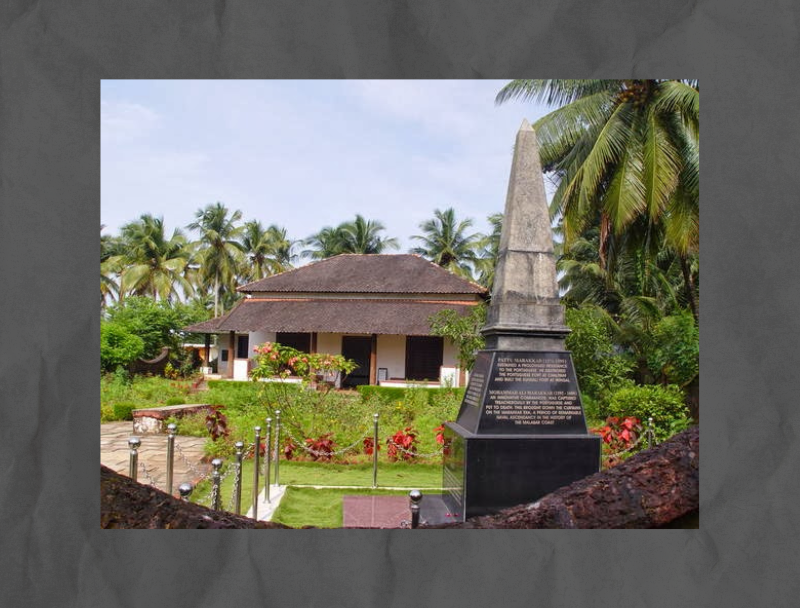
Kunjali Marakkars gained prominence when the Zamorin appointed Kunjali I as the admiral of his naval fleet. However, prior to this, they were a merchant group, which dominated coastal trade. Initially, they collaborated with the Portuguese but later turned against them.

Before the arrival of Portuguese, the transoceanic trade of Malabar was controlled by foreign Muslim merchants, while the Marakkar Muslim merchants managed a significant share of trade between Coromandel Coast and Malabar. They transported textiles, rice, and food provisions to Malabar. Their trade network, rooted in the rice belt of the Kaveri region, allowed them to ensure a steady supply of rice in exchange for spices in Malabar. The treaty of 1513 A.D. between the Zamorin and the Portuguese, which promised spices to be supplied exclusively to the Portuguese, resulted in Egyptian Karimi merchants to flee from Calicut. The Marakkar merchants capitalised on this opportunity. Until then, they had dominated coastal trade. Thus, they began exporting pepper to the Red Sea and Arabia.

When the Portuguese arrived in Malabar to control and dominate spice trade, they opposed anyone involved in it. They discovered that Egyptian merchants in Calicut, supported by the Zamorin, controlled the spice trade, so they targeted these merchants and their vessels. Until the second decade of the 16th century, the Portuguese primarily focused their hostility on foreign Muslim merchants, as they were the backbone of the Red Sea-Egypt trade. To further their goal of establishing a Lisbon-oriented long-distance trade network, the Portuguese incorporated local Mappila and Marakkar merchants into their commercial system as collaborators and partners. The Marakkar merchants, in particular, became key suppliers of food materials. This collaboration began in 1502 when Vasco da Gama negotiated with leading Muslim merchants in Cannanore and Cochin to fix the prices of spices.

As a war tactic, the Zamorin created an artificial famine in Cochin. He attacked Cochin and persuaded Muslim merchants to halt the supply of rice to the region. In response, Ismail Marakkar, the head of the Muslim community, officially prohibited rice trade with Cochin. However, the Portuguese overcame this crisis with the help of Muhammed Marakkar. Duarte Pacheco resorted to kidnapping the family members of Muslim merchants and holding them hostage, forcing them to resume rice supplies.

In 1503, Charine Mecar (Cherine or Karim Marakkar) approached Albuquerque to supply pepper without the Zamorin’s knowledge. In 1504, Cherina and Mamale Marakkar provided 3,000 bahars of pepper to the Portuguese for 6,000 cruzados for Lopo Soares’s fleet. Nino Marakkar regularly supplied Ceylon cinnamon to the Portuguese in Cochin and even provided ships and forces to aid the Portuguese in their conflicts with the Zamorin. On one occasion, Chilay Marakkar lent his own ship to transport goods to Goa.

The Marakkar merchants were a formidable force. Initially, they served as suppliers to the Portuguese. During this period, the Red Sea trade was predominantly controlled by Egyptian merchants, while the Marakkars primarily concentrated on coastal trade. Seeking new opportunities, they decided to collaborate with the Portuguese. However, with the arrival of the Portuguese, who targeted Egyptian merchants and their ships to dominate the Red Sea-Malabar spice trade, the Egyptians gradually withdrew from Calicut. This shift allowed the Marakkars to focus on the Red Sea trade route, eventually emerging as powerful players and becoming the chief suppliers of spices to the Ottomans.

Through their connections, the Zamorin sought assistance from the Sultan of Egypt against the Portuguese. Simultaneously, Egyptian merchants in Calicut pressured the Sultan to act, resulting in a fleet led by Mir Husayn, armed with advanced weapons and 1,500 men, arriving in Diu in 1507. Later, in 1538, an Ottoman fleet reached Vilinjam at the request of Pate Marakkar to counter the Portuguese growing influnce, highlighting the close ties between the Marakkar merchants and the Ottomans. In the post-Albuquerque period, the Marakkar merchants faced increasing challenges due to the Portuguese state expansion. The Portuguese frequently attacked and confiscated Marakkar vessels under the pretext of inspecting cartaz permits, leaving many merchants impoverished and unable to fund future ventures. The cartaz system, designed to control native vessels in Malabar, became a strategic tool to undermine Muslim merchants during Portuguese state formation. Consequently, the former collaborators of the Portuguese became their adversaries. By the third decade of the 16th century, these tensions escalated into direct confrontations between the Portuguese and the Marakkars. Additionally, the Portuguese expansion of private trade into the eastern Indian Ocean further marginalized the Marakkar merchants, compelling them to resist Portuguese dominance.

As a result, the Marakkars relocated their residence and base of operations from Cochin to Calicut by 1524. This move included prominent figures such as Kunjali Marakkar, Ahmad Marakkar, Muhammed Ali Marakkar, and their dependents. Even Pate Marakkar, who had previously allied with the Portuguese, turned against them after they seized two of his ships. From 1525 onwards, the Zamorin allied with the Marakkars, leveraging their navigational expertise and mercantile resources to launch attacks against the Portuguese. Following the Treaty of 1513 and the establishment of a Portuguese fortress in Calicut, the Portuguese imposed significant obstacles to the spice trade in both the port town and its hinterlands. A series of conflicts ensued, culminating in the destruction of the Portuguese fortress in Calicut in 1525. Thus, the victims of Portuguese atrocities, the Zamorin and the Marakkars united in their resistance. The Zamorin appointed Kunjali Marakkar as the naval admiral of his fleet, marking the beginning of an intensified struggle against Portuguese hegemony.

The Marakkar fleet played a crucial role in extending the Zamorin’s sphere of influence along the western coast and the pearl fishery coast. With the Zamorin’s patronage, similar to what the Karimi merchants once received, the Marakkars began restructuring trade in Calicut. Mappila Muslims also acknowledged their dominance. As the Marakkars shifted their operations to Calicut, Portuguese private traders filled the resulting commercial vacuum, occupying the Marakkars’ former space in Cochin and emerging as a significant force in the Indian Ocean trade network. As Ceylon-Coromandel-Malabar trade route was dominated by the Marakkar merchants, even after relocating to Calicut, they continued to use this route, aiming to maintain control over Gulf of Mannar and Coromandel. This helped them in their naval confrontations against Portuguese and Kunjali’s forces targeted Portuguese ships along the eastern coast of India. In 1527, Pate Marakkar captured a Portuguese ship in Nagapattinam. Their involvement in the pearl trade along the fishery coast and the cinnamon trade of Kotte led to significant conflicts with the Portuguese. When the Portuguese executed the first Kunjali and Pate Marakkar in 1537, the Marakkars’ ambitions to establish Coromandel and Ceylon as bases for their Red Sea-oriented trade came to an end. The resulting vacuum was entirely filled and dominated by Portuguese private traders.

After 1540, Kunjali’s forces intensified their attacks on Portuguese vessels. They patrolled the western coast with the Zamorin’s approval, blockading and plundering Portuguese ships. Until 1600, the Portuguese were continually harassed by Kunjali and his fleet. Portuguese records state that Kunjali captured no fewer than 50 Portuguese ships in a single year.

References

  • K. M. Panikkar, Malabar and The Portuguese (Bombay: D.B. Taraporevala Sons & Co, 1929).
  • K. S. Mathew, “Portuguese Trade with India and the Theory of Royal Monopoly in the Sixteenth Century,” in Proceedings of the Indian History Congress, Vol. 40 (1979).
  • K. V. Krishna Ayyar, The Zamorins of Calicut: From the earliest times down to A.D. 1806 (Calicut: University of Calicut, 1999).
  • Genevieve Bouchon, Regent of the Sea: Cannanore’s Response to Portuguese Expansion, 1507–1528 (Delhi: Oxford University Press, 1988), 23.
  • Pius Malekandathil, Maritime India: Trade, Religion, Polity in the Indian Ocean, revised edition (New Delhi: Primus Books, 2013).