

"Explore the rich tapestry of the Malabar region, where centuries of history, culture, and tradition come together.

Get In Touch

img

University of Calicut,
Edapally - Panvel Hwy, Thenhipalam,
Kerala 673635, India

Malabar History journal

  • Home
  • Malabar History journal
Blog Image

MANANCHIRA GROUND

Public spaces play a crucial role in both public life and social interactions. Many public or open spaces started to appear in colonial India because of the introduction of industrial capitalism and colonial modernity. Public engagement needed a place in the city. Originally associated with the European way of life, this public arena gradually gained popularity among locals who had been influenced by English education and culture as well as other affluent groups. It was a place to go in the afternoon for a leisurely stroll or coach ride, to play football or cricket, to watch films, to see a bioscope, to see exhibits or a circus etc. The Maidanam was frequently used as a public area in cities and temples throughout Kerala.

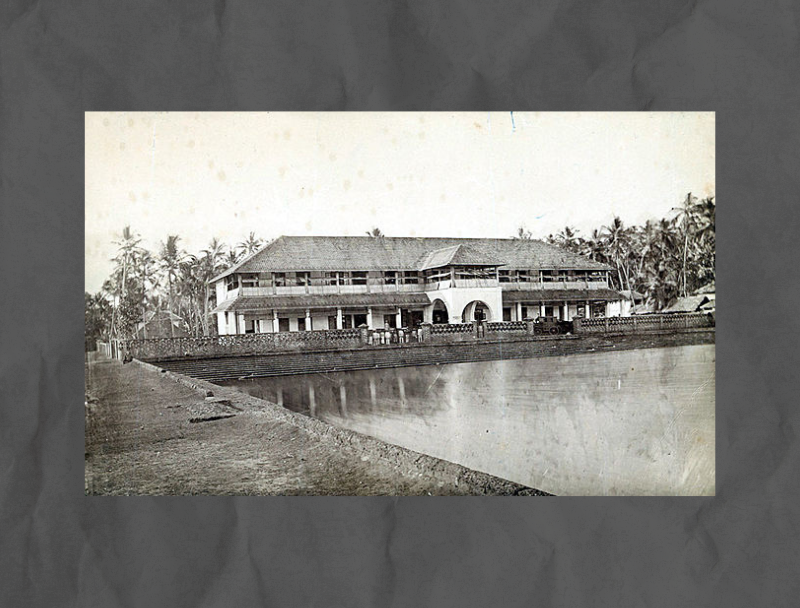
Mananchira Maidanam of Calicut provided the city with open space. The maidanam has been around since the Zamorin era and was not invented by the British. Before the Zamorin migration, Mananchira was a location with lakes and bushes. Later on, Mananchira, also known as the Manavikraman tank, served as the Zamorian royal complex’s main source of drinking water. In the early 19th century, Mananchira Maidanam and surroundings emerged as a central point of colonial establishments initiated by the British. Later Mananchira maidanam also became a stage for industrial capitalist exhibitions and nationalistic expressions. The parade of the soldiers also took place on this ground but was shifted to the Vikram ground near West hill barracks later. This field was called ‘Parade Ground’ in 1845 by locals. In Mananchira, hockey and cricket matches were conducted regularly.They were initially played by Europeans, but eventually the locals also picked up the game. Thanks to the efforts of British commander Arthur Wellesly, cricket was no longer just for the privileged. He made sure the game encompassed every segment of the population. At Mananchira Ground, cricket test matches were played every week.

In the afternoon, the players were served buffet meals in the upstairs of the Huzur kachery, which also served as their changing room.

To demonstrate their military power, the British held parades and Kavaths at Mananchira. Circus soldiers and cinematographers arrived in Mananchira around the beginning of the 20th century. The British government placed administrative limitations on Mananchira after realising the potential of maidanam and decided to regulate it as a public area.

Visit of Prince of Wales and fencing of Mananchira

The initial fencing of the Mananchira Maidanam took place in 1906. This venture was supervised by Rarichan Mooppan, a wealthy tiyya. Meanwhile, the British Prince visited Kozhikode. Kozhikode Pauravali decided to make this visit a grand event. To manage the specific event, a committee called the “Royal Visit Committee” was formed. With the help of the Rarichan moopan, this committee fenced the Mananchira fields. Additionally, the ground was newly named as “Prince of Wales”.

Grass of Mananchira v/s Government

The mananchira maidanam was the subject of several disputes. Mananchira’s grass was one of them. Only when a resolution over the grounds’ ownership was achieved did it come to an end. Back then, there was a lot of grass growing in Mananchira. The Municipal Council used to do it. At the time, Francis was the collector and questioned their authority. The city council believed they had the authority as well. The government sent a notice outlining its policy following many clashes. The Municipal Council would not have any authority over the Mananchira Maidan. Following that, the Kozhikode police asserted their claim to the grass at Mananchira Maidan, which was the first action taken by the government. The order was issued that the cows of the constables were to be sold.

Circus and Mananchira

The circus and Manachira also have some connections. Mananchira Maidan was a popular place where circus troupes camped when in the city. . The circus firms were required to pay the government fifty rupees for this. Officials from the Pearce Leslie firm, Walls and Langley, disagreed. They wrote in this manner to the collector. “The circus brings people to town who don’t want to be in the city.” Furthermore, hideous circus animals arrive in Mananchira Pond. In addition, patients at the Municipal Council Hospital find it annoying when people walk on the tramps. It should also be prohibited for police constables’ cows to access the premises. After this allegation, Knapp, the Kozhikode Collector, outlawed circuses by adopting legislation on June 7, 1910. Also cancelled the right to graze cows by policemen.

Maidanam and national movement

During the national movement, the INC and the Home Rule League had agreed to hold the second Malabar district political conference in Mananchira Maidanam in 1917. This meeting was chaired by C.P. Ramaswamy Iyer, secretary of the All-India Congress Committee. The conference’s reception committee was led by P. Achuthan, K.P. Kesava Menon, T.V. Sundaram, K.P. Raman Menon and others. The Manachira Maidanam’s district officials were asked to run the event by the organising committee. The permission to using the Maidanam was rejected by the government, and it was discussed in Malabar’s nationalist circles. On the same schedule, the conference was later conducted at K.P. Raman Menon’s tennis court.

Day schedule for the use of ground

The Mananchira grounds had various issues as a result of the sports activity schedule. The disagreement was on when and by whom the Mananchira Maidan may be used. Here, a committee was also established under the name of ‘Mananchira Committee’. In 1918, Evans, the Collector, agreed to serve on the committee. The committee decided to resolve the conflict in the following way: The ground can be used by the police and cricket on Saturday, Friday and Sunday, the medical school and the native school on Monday, the club called “Early Closers” on Tuesday and Thursday, and the Guruvayoorappan College on Wednesday.

In this way, manachira became a bone of contention between natives and colonial authority. By using maidanam, the British sought legitimacy through the military parade and kavath, while nationalists sought support through mass gatherings. The Independence Day celebration of 1947 also held in Mananchira. In the late 19th century, calicut’s municipal council decreed that the pond was to be reserved exclusively for drinking purposes, and prohibited its use for bathing, washing and recreational activities—a ruling that has remained in place ever since. In 1994, a park complex surrounding the lake was opened at mananchira ground. Still it continue as a space for mass gathering and leisure activities with restrictions issued by the Kozhikkode Corporation.

References

  • Jidhu, M. U. “Architecture in the Urban Space: The Life of the Elite in Colonial Calicut.” Proceedings of the Indian History Congress, vol. 75, 2014. JSTOR.
  • Narayanan, M. G. S. Calicut: The City of Truth Revisited. University of Calicut, 2006.
  • Remya, K. “Manachira Maidanam: Evolution of a Public Space.” Proceedings of the South Indian History Congress, vol. 33, 2013. Link.
  • Seluraj, T. B. Kozhikkodinte Paithrikam. Mathrubhumi Books, Calicut, 2011.