

"Explore the rich tapestry of the Malabar region, where centuries of history, culture, and tradition come together.

Get In Touch

img

University of Calicut,
Edapally - Panvel Hwy, Thenhipalam,
Kerala 673635, India

Malabar History journal

  • Home
  • Malabar History journal
Blog Image

Malayala Manorama

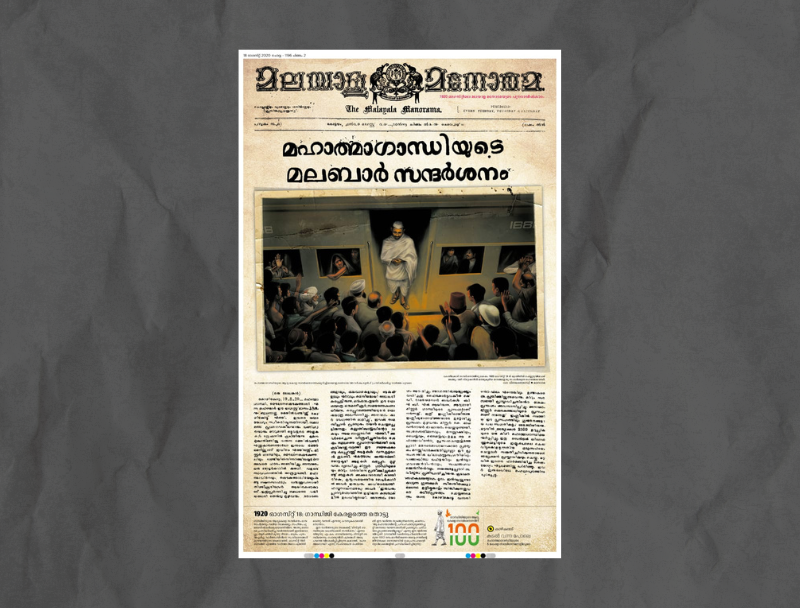
Malayala Manorama, first published on March 22, 1890, from M.D. Seminary, Kottayam, is the second oldest Malayalam newspaper still in circulation after Nasrani Deepika. Founded by Kandathil Varghese Mappilai, the Malayala Manorama has 1.78 crore readers according to the Indian Readership Survey (IRS). At present, the newspaper is published by the Malayala Manorama Company Limited, owned and operated by the family of Kandathil Varghese Mappillai, and publishes weeklies and other periodicals in Malayalam and English languages. It has also been publishing a prominent national news magazine named ‘The Week’ since 1982.

History

The Malayala Manorama Group was established as a stock publishing company in Kottayam, Kerala, by Kandathil Varghese Mappillai in 1888. Two years later, in 1890 Varghese Mappilai, who had one year of experience as the editor of Kerala Mitram launched Manorama. The first issue was published on 22 March 1890 from M.D Seminary, Kottayam, He attempted to secularize the newspaper at a time when most journals were published by churches. Initially, the newspaper was published weekly on Saturdays and prioritized literary content.

Eventually, it evolved into a biweekly in 1901, a tri weekly on July 2, 1918, and a daily on July 2, 1928. Varghese Mappilai edited the paper for 14 years until his death in July 1904. He published Bhashaposhini and organized a Kavi Samajam (Poets forum) to advance Malayalam literature and language. After his death, his nephew, K. C. Mammen Mappillai, took over as editor.

On September 9, 1938, the Travancore state banned the Malayala Manorama newspaper and confiscated its properties for publishing news against the Diwan, C.P. Ramaswamy Iyer, which also resulted in the imprisonment of Mammen Mappillai. As a result, its publication was stopped for nine years. Mammen Mappila was released from jail on 8 September 1941.

After Indian independence and Diwan’s downfall, the government, under Acting Dewan Sri. P.G.N. Unnithan, returned the press and buildings of Manorama and issued licence for the re- publication of the paper. Thus, in Independent India, the newspaper began publication from Kottayam on November 29, 1947. Till 1954, K.C Mammen Mappilai continued as the editor-in-chief of the newspaper. Following his death in 1954, K. M. Cheriyan, the eldest son of Mammen Mappillai, became the editor-in-chief of the newspaper and remained in the position till 1973 until his passing. After his death, his brother K.M Mathew took over the position until he died in 2010.

K.M. Mathew made significant modifications to the publication after taking over as editor. He emphasized the importance of employee professional growth of the newspaper. To accomplish this, he sent his top journalists and managers to training institutions across the world and implemented excellent international journalism and newspaper production processes. These adjustments gave the publication a fresh appearance. Consequently, Malayala Manorama increased its operations in the mid-2000s by establishing facilities in the Middle East, where there is a big Malayali population. In 2010, K.M. Mathew was succeeded as editor-in-chief by his son Mammen Mathew.Currently, Mammen Mathew, the eldest son of K.M Mathew, serves as the chief editor of the newspaper.

The company that owns the Malayala Manorama newspaper currently offers a variety of publications that are distinctively tailored to men and women and for various age groups, namely, the Malayala Manorama Weekly, Balarama, Vanitha, Yearbook, The Week, Karshakashree, Thoshilveedhi, Balarama Digest, Kalikkudukka, etc. It also started a Television News Channel in Malayalam on 17th August 2006.

Political standpoints.

Manorama describes itself as a secular newspaper. It accelerated the spread of information and ideas concerning the major events of the period Powra Samatva Vadam, Vaikkom Sathyagraha, Temple Entry, Nivarthana Agitation,and the Malabar Rebellion. It also espouses highly critical views on communist ideas.

References

  • Emil Manu Oommen. (2019). Syrian Christians in Kerala and their Enterprising Ventures in the Twentieth Century. Research Guru, 12, pp. 254–255.

    http://www.researchguru.net/volume/Volume%2012/Issue%204/RG34.pdf
  • M. V. Thomas. (2012). The Role of Malayalam Newspapers in the Freedom Movement in Kerala [Doctoral Thesis, Department of Communication and Journalism, University of Kerala – Karyavattom Campus].
  • P. Rekha. (2015). National Movement and Nationalist Press in Kerala. Review of Social Sciences, 16, p. 97.
    http://www.socialsciencesreview.org/files/2018-09/xvi-no.1-jan-june-2015.pdf#page=94
  • History of Media in Kerala. Kerala Media Academy. Accessed on 06.06.2023 from
    http://keralamediaacademy.org/?page_id=317
  • History of Malayala Manorama. (2020). Accessed on 06.06.2023 from
    https://learn.releasemyad.com/history-of-malayala-manorama/
  • Malayala Manorama. India Netzone. Accessed on 06.06.2023 from

    https://www.indianetzone.com/24/malayala_manorama_malayalam_newspaper.htm
  • Malayala Manorama. Slideshare. Accessed on 06.06.2023 from
    https://www.slideshare.net/tanakshi/malayala-manorama-malayalam-press-history-and-current-readership