
"Explore the rich tapestry of the Malabar region, where centuries of history, culture, and tradition come together.

Get In Touch

img

University of Calicut,
Edapally - Panvel Hwy, Thenhipalam,
Kerala 673635, India

Malabar History journal

  • Home
  • Malabar History journal
Blog Image

Malabar manual

The Malabar Manual, a compendium of administrative, judicial, and revenue procedures, stands as a hitherto underappreciated cornerstone in the annals of colonial India. While the region’s history has been the subject of considerable scholarly attention, the Malabar manual’s significance as a primary source has been largely overlooked. The complex interaction between the colonizer and the colonized in the Malabar area may be examined via the unique lens provided by this text, which was created during a crucial era of British colonial control. The Malabar Manual offers priceless insights into the socioeconomic, cultural, and political climate of the era by exploring the intricacies of routine administrative procedures.

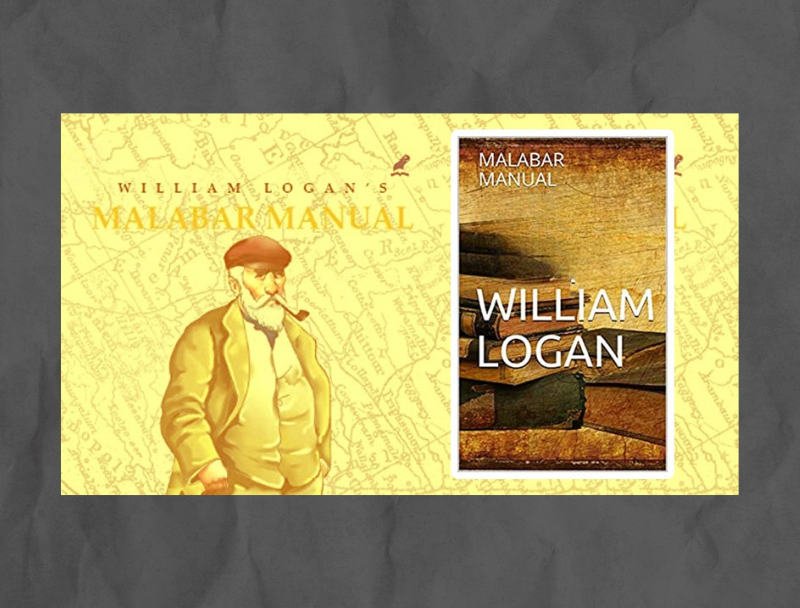
William Logan

William Logan was a Scottish officer who played a pivotal role in the British administration of Malabar as a collector and magistrate of the district, and fellow of the University of Madras. He was born on May 17, 1841, in Ferney Castle, Scotland. Logan arrived on the Indian subcontinent, where he would significantly advance knowledge of the area. In 1862, Logan became a member of the Madras Presidency Civil Service after passing the very competitive Indian Civil Service test. Logan was first hired as the Assistant to the Collector of North Arcot after clearing the vernacular examinations in Tamil, Telugu, and Malayalam. His area of work has been nearly entirely restricted to the District of Malabar since 1866 when he held several positions in the judicial and revenue departments. Logan spent about 20 years in Kerala as an acting resident collector and later, as a judge under the British East India Company.

His extensive knowledge of the area and his aptitude for administration made him the ideal candidate to put together the extensive effort that would eventually become the Malabar Manual. The Malabar Manual, which summarised the district’s history, geography, society, economics, and government, was a huge undertaking that was published in 1887. Logan’s fluency in Malayalam, Tamil, and Telugu further improved his capacity to explore the complexities of Malabar’s politics and culture. Logan’s life and contributions to scholarship provide an intriguing viewpoint on the intricacies of colonial India and the influence of individual administrations on historical development. His Malabar Manual is still a vital tool for academics and researchers doing study in the area.

Malabar manual as a monumental work

Malabar Manual is a compilation of data and presumptions gleaned from Logan’s research and travels. It is a comprehensive source of precise information about the region’s topography, rivers, mountains, geology, climate, and natural phenomena, as well as the flora and fauna, people, economy, caste system, occupations, manners, and customs, religion, language, literature, and other relevant aspects. The position of serving as the district’s administrative head granted him access to the vast resources, and he was also surrounded by a committed group of ingenious locals who worked for him and contributed valuable information to the compilation of the Malabar Manual. It is regarded as a classic on Malabar’s land and civilization, and it is certainly one of the best-documented district gazetteers from the colonial era.

The work was commissioned by the Government of Madras, and originally published in two volumes. The book was originally named Malabar later renamed as Malabar Manual by the Kerala gazetteers department. This monumental work on Malabar was first published in 1887 by the government of Madras and reprinted in the years 1906, 1951, and 2000. Logan’s contribution stands out in particular for providing a thorough economic explanation for the Malabar region’s repeated Mappila Muslim Revolts. The book’s value was sufficient that the government reprinted it in 1906, about the same time that C A Innes prepared a new gazetteer for the region.

Chapterisation of Malabar Manual vol 1&2

Volume 1 of the Malabar Manual primarily focuses on the geographical and demographic aspects of the Malabar region. Vol 1 spreads over 750 pages. Now, with a foreword, a preface, and a few introductory pieces, together running to less than 70 pages added, it comes with an altogether new title: William Logan’s Malabar Manual. Appearing below the new title are five names. There are 4 chapters in the first volume of the Malabar Manual. The first chapter “District” provides a comprehensive overview of the region’s physical features, including mountains, rivers, backwaters, coastal areas, canals, geographical formation, climate and natural phenomena, fauna, flora, passes, roads, railways, ports, and shipping facilities.

The second chapter “the people” included demographic and sociological factors like the number and density of the population, civil condition, age and sex, town, villages, dwellings and rural organization, the language, literature, and the state of education among the people, caste, occupations, manners, customs, religion, health-related indexes like famine, diseases, and medicines.

Historical trajectories of Malabar are the major theme in the third chapter which narrates the ancient history of the Malabar region from Keralolpatti to British supremacy onwards the Srirangapattinam treaty of 1792. Of the seven sections constituting the ‘History’ chapter, the last three deal with the history of ‘The Struggle for the Pepper and Piece Goods Trade (1663-1760)’, ‘The Mysorean Conquest (1766-1792)’ and ‘The British Supremacy (1792 to date)’, all dealing with the pre-modern and modern period of Kerala.

The fourth and last chapter discusses aspects of land tenure and land reform in Malabar during that period. In fact, the socio-economic history of the period must be picked up from the chapters on ‘The People’ and ‘The Land’.

Vol 2 of Logan’s Malabar comprises the 21 appendices to Vol 1. Maps and illustrations were also provided for the necessary data.

Historiographical characteristics:

A Eurocentric bias is seen as a product of colonial administration, the Manual reflects the colonial worldview and understanding of the region. Logan, despite his efforts to understand local customs and practices, was constrained by the limitations of his time and his position as a colonial officer. The Malabar Manual primarily focuses on administrative matters, often neglecting or downplaying the perspectives and experiences of the colonized population. It offers detailed insights into the British administrative system in Malabar, including revenue collection, judicial procedures, and police administration. Furthermore, the Malabar Manual acts as a primary account in the writing of the region’s history, a product of colonial administration, it offers a unique perspective on the region from the eyes of the rulers. Besides, the manual presents accurate quantitative data for the descriptions. Valuable statistical information on population, land holdings, and other crucial aspects of the region’s socio-economic life are neatly arranged in these volumes, especially in volume 2.

Although the Malabar Manual might be viewed as a historical text, the author cannot be considered a historian. The reason is that he avoids objective or theoretical interpretations. However, many historians think that his viewpoints, in the lack of scientific technique, can be sustained as a historical narrative.

References

  • Logan, W. Malabar Manual, Vol. I, Madras: Madras Government Press, 1887.
  • Logan, W. Malabar Manual, Vol. II, Reprint, New Delhi, 1989.
  • Venu, P. “An Historiographical Critique of William Logan (With Reference to Modern Kerala History),” Proceedings of the Indian History Congress, Vol. 52, 1991, JSTOR.