

"Explore the rich tapestry of the Malabar region, where centuries of history, culture, and tradition come together.

Get In Touch

img

University of Calicut,
Edapally - Panvel Hwy, Thenhipalam,
Kerala 673635, India

Malabar History journal

  • Home
  • Malabar History journal
Blog Image

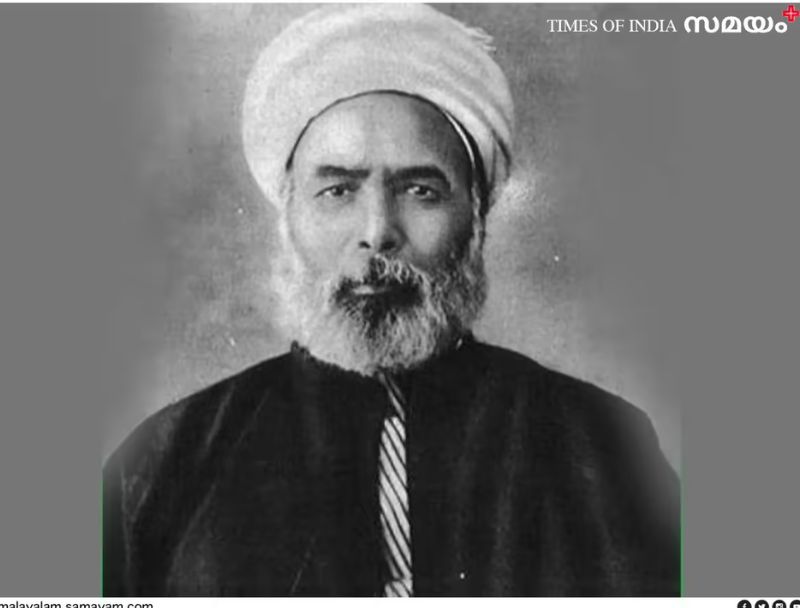
Makthi Thangal

Sayyid Sanaullah Makthi Thangal (1847-1912) was a prominent Islamic scholar, writer and journalist. He is regarded as the pioneer of Muslim reformation in Kerala and the Islahi movement in Kerala.

Biography

Makthi Thangal was born in 1847 in Veliyankod in Ponnani taluk of Malappuram district. His father was Ahammad Thangal, a follower of Valiyangode Umer Khazi. He belonged to the family of Sayyids who trace their roots back to Arabia. He studied Arabic literature from his father. Further, he joined the Dars in Veliancode, Ponnani and Maranjeri. He joined Chavakkad higher elementary school and earned proficiency in English, Tamil, Malayalam and Persian. He had a good knowledge of both Islamic and secular sciences. He died on 18 September 1912.

Ideology

Makthi Thangal belonged to the reformist trend within Islam. His ideas resembled the approach of the Saudi Arabian figure of the Wahhabi movement, Muhammad ibn ‘Abd al-Wahhāb.

The following were his major ideas:

  • Rationalization of Islam through a scripturalist lens.
  • Reform practices and local customs that, in his view, were not part of the Islamic faith.
  • Focus on public education.

Major Contributions

After completing his study at the Dars, he began his career as an excise inspector for the British government. When he saw the British government employ missionaries and promote conversion among people taking advantage of their poor social situation, the erroneous practices and ignorance within the Muslim community, the community pushed to the margins with a lack of public education, he resigned from the post and involved in reformist practices. He strongly condemned the attempts of the missionaries to take advantage of the people’s ignorance and poverty. He stood against the moves of the Christian missionaries to inspire people to convert to their religion. Thus, criminal charges were fabricated against him. This led him to be isolated and people feared keeping in contact with him. For about six months, Thangal lived wandering for basic necessities such as food.

Through his writings, he argued for total adherence to the authority of the Quran and Hadith and criticised shirk (polytheism), bida-at (erroneous innovation) and other superstitious beliefs that he believed would deviate Muslims from true Islam. He called on the people to stop practices such as the accession of dead saints and
Prophets for intercession (istighatha) with God, visiting of tombs seeking saintly help,
requesting saints or other holy persons through the recitation of hagiographical poetries and litanies such as maulids and malappattu, the belief in the miraculous powers of Sufi saints and trust in their blessed power (baraka) and the unconditional surrender of a devotee to a Sufi master. He said such innovative practices were borrowed from the Hindu religious tradition and were alien to true Islamic practices.

In 1884, Makthi Thangal wrote his first book in Malayalam named ‘Kadora Kudaram’ as a resistance against the British-supported Christian missionary religious conversions in the region. In 1885, he wrote another book called “Paropakaari” as a part of his reformist works. His work ‘Muslimgalum Vidyabyasavum’ (Muslims and education) encouraged Muslims to embrace Malayalam and English education and ‘Naari Narabhichari’ (Women always follow Men) was written as a part of his campaign for women’s reform. It talked of the need for women’s education. He wrote articles in Salah-ul Iqvan titled ‘Muslimkalum Marumakathayavum’ (Muslims and Matriliny) criticizing the matrilineal system and called it a part of the Hindu culture. He also wrote a small note in his tract Parcaleetha Porkalam (Battlefield for Deciding the Comforter).

A polemicist, he published polemical literature in Malayalam against Christianity, defending Islam against the accusations of western critics and prevented conversions. The work received wide circulation.

References

  • Ahammad, A. P. (2010, August). മുസ്ലിം നവോത്‌ഥാനം ചില കേരളീയ ചിത്രങ്ങൾ [Malayalam]. Kairali Books.
  • Abdullah, T. K. (2005, December). Islamika Vijnaanakosham (Vol. 8) [Malayalam]. Islamic Publishing House.
  • Saleej, A. (2022, April 14). Makthi Thangal (മക്തി തങ്ങൾ) | KPSC & HCA Study Material. Adda247 Malayalam. Retrieved September 27, 2022, from
    https://www.adda247.com/ml/jobs/makthi-thangal/
  • Abdul Basith, M. A. (2012, June 15). Sanaullah Makthi Thangal – the First Muslim to Write Books in Malayalam. TwoCircles.net. Retrieved September 27, 2022, from

    https://twocircles.net/2012jun15/sanaullah_makthi_thangal_first_muslim_write_books_malayalam.html
  • Pradeep, K. (2016, May 23). The Forgotten Legacy of Makthi Thangal. The Hindu. Retrieved September 27, 2022, from

    https://www.thehindu.com/features/metroplus/hidden-histories-syed-sanaullah-makthi-thangal-lies-buried-in-the-ancient-juma-masjid-at-calvathy/article6552537.ece
  • Makthi Thangal and Others. (n.d.). Teachmint. Retrieved September 27, 2022, from

    https://www.teachmint.com/tfile/studymaterial/opencoursehistory/keralarenaissance/makatithangalandotherspdf/4ae27c4f-789c-4b0a-8512-1c2109631fd7
  • “Sayyid Sanaullah Makti Tangal.” Wikipedia. (2021, November 13). Retrieved September 28, 2022, from

    https://en.wikipedia.org/wiki/Sayyid_Sanaullah_Makti_Tangal
  • Niyas Ashraf, Muhammad. (2017). Modernity and Reform in Colonial Kerala: Revisiting the Contributions of Sayyid Sanaullah Makti Tangal, 1884–1912. Annual Refereed Social Science Journal.