
"Explore the rich tapestry of the Malabar region, where centuries of history, culture, and tradition come together.

Get In Touch

img

University of Calicut,
Edapally - Panvel Hwy, Thenhipalam,
Kerala 673635, India

Malabar History journal

  • Home
  • Malabar History journal
Blog Image

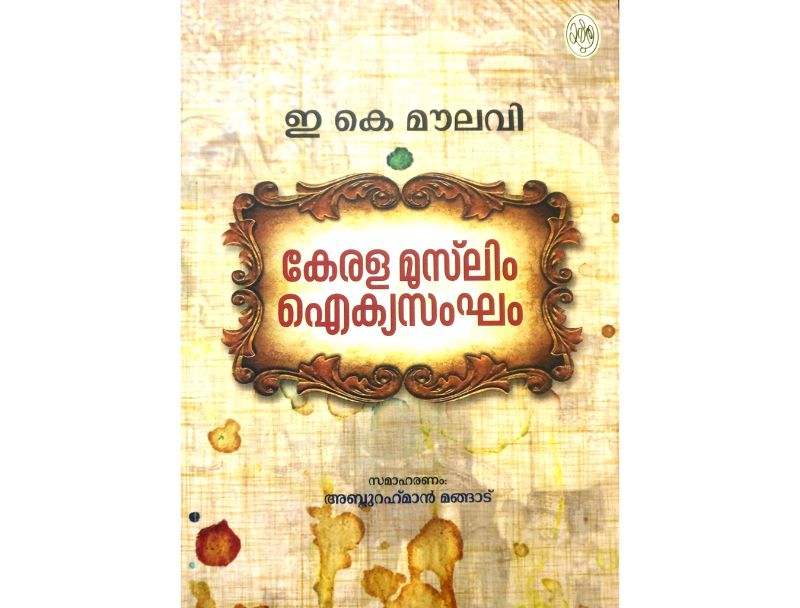
Kerala Muslim Aikyasangham

Kerala Muslim Aikyasangham, formed in 1922 in Kodungalloor of Thrissur district was the first all-Kerala organisation of Muslims. The organization followed Salafi thought inspired by the ideas of Islamic scholars of the reformist trend of Egypt namely Muhammad ibn Abdul Wahab (1703-1792), Jamaluddin Afghani (1839-1897), Muhammad Abdu(1845-1905), Rashid Riza (1856-1935). Among the founding figures of Aikya Sangham were Sayyid Sanaulla Makti Thangal, Sheikh Hamadani Thangal, K.M. Moulavi and Vakkom Moulavi. The first annual conference of the Aikyasangham was held in Aluva in 1924. The organization established its strongholds in Malabar by conducting its 3rd annual conference in Kozhikode. After receiving staunch opposition from a group of scholars at the time including Moidu Moulavi and Muhammad Abdu Rahman Sahib, the Sangham stopped functioning in 1934 with its last conference held in Arakkal, Kannur. Also, followed by the death of one of its prominent leaders Vakkom Moulavi in 1934, the Aikyasangham merged into Muslim Majlis. Further, it refocused more on the activities of its advisory committee, ‘Kerala Jam’iyyatul Ulema’.

The objectives of Aikya Sangham as laid out in their constitution were:

  • To unite Muslims by removing their internal differences and by working for the welfare of the community.
  • To reform religious, moral, and economic circumstances of Muslims by putting an end to un-Islamic practices.
  • To establish a forum with selected members of the Sangham. The forum shall settle disputes among Muslims and prevent them from occurring in the future.
  • To educate people through tracts, pamphlets, and public lectures.

History

The idea for a joint effort to bring Muslim renaissance initially came through the establishment of a committee called ‘Nishpaksha Sangham’. It was formed by Shaykh Mahin Hamadani Thangal in 1922. It was formed to resolve the issues within families in Muslim majority villages of the Kodungalloor Taluk namely Azhikode and Eriyad. The Sangham received a warm acceptance in the area. This inspired its founding figures to think of expanding the organization to other places. In 1922, a meeting of the Sangham was held at Eriyad, which officially proposed its expansion across the state. According to the decision of the meeting, the organization ‘Kerala Muslim Aikyasangham’ was formed.
The first annual conference of Aikyasangham was held in Eriyad in 1923 under the leadership of Vakkom Moulavi. At this conference, the Sangham drafted a definite plan and proposed its first agenda as putting an end to practices like Chandanakkudam and Kodikuthu which they deemed as erroneous practices. The Sangham was met with severe criticism from the community. Despite this, the Sangham formed several formal and informal associations in many other areas of Kerala. The ‘Muslim Nishpaksha Sangam’ and ‘Dharma Sangam’ were important among them. The common goal of all these organizations was to promote the unity of Muslims based on the message of the Quran and the teachings of Prophet Muhammed. The annual meetings of Kerala Muslim Aikhya Sangam gained attention from the participation of international Islamic scholars such as Marmaduke Pickthall. The second annual conference of the Sangham was held in 1924. This conference led to the birth of an organization called ‘Kerala Jam’iyyatul Ulama’. Kerala Jam’iyyatul Ulama was formed as a platform for different scholars to come together and discuss issues that concern Islam and Muslims. The organization also called for a theological reformation of the Ulema. It also encouraged Muslims to settle their differences and return to the message of the Quran and the teachings of Muhammed. This message attracted educated people in the community.

Slowly, the organization gained the confidence of the Muslims of Kerala. As it moved on, the strong criticism of the organisation of the superstitious practices within the Muslim community provoked a group of scholars and led to the establishment of another organisation named ‘Samastha Kerala Jam’iyyatul Ulema’ in 1926 in Kozhikode to educate against the reformist attempts. Eventually, Aikyasangham weakened and was merged with Kerala Muslim Majlis. Kerala Muslim Majlis was started at the beginning of the 1930s. It was formed by the Muslims in the British Malabar, South Karnataka, Cochin and Travancore at the Kerala Muslim conference held at Thalassery on Aug 22 to 23, 1931. It was formed for the protection of the rights of Muslims and the reformation within. It resembled Aikyasangham in its objectives. However, it did not turn out to be successful as it focused only on countering other Muslim religious organizations in Kerala. This led the former associates of the Sangham to think of focusing more on religious reformation than a socio-political one. This led them to reactivate Kerala Jam’iyyatul Ulama. However, realizing the limitations of a pure scholarly body to interact efficiently with common people the working committee meeting of KJU further decided to form a public organization. Thus, Kerala Nadvathul Mujahideen (KNM) was formed. It was officially formed on 20 April 1950 by a meeting held at the office of “Al Manar” Magazine at Calicut. KJU still exists as a parent body of the ‘Kerala Nadvatul Mujahideen’.

Major Contributions

The Sangham after noticing that a larger section of the community was economically poor and had to depend on money lenders who charged huge amounts of interest, worked for their liberation from the claws of money lenders and bankers through the establishment of an interest-free Muslim bank. However, the idea had to be dropped due to severe criticism from the close supporters regarding lack of working model. It published magazines to propagate its ideas. Two of the earliest journals published by Aikyasangham were Muslim Aikyam in Malayalam and Al Irshad in Arabi-Malayalam. Al Irshad was published to dissent against the practices endorsed by the scholars of Samastha which according to the Aikya Sangham, needed to be stopped. The magazine received many criticisms and stopped its publication shortly.

References

  • Abdullah, T. K. (2004, December). Kerala Muslim Aikyasangham (Vol. 8) [Malayalam]. Islamic Publishing House.
  • “Kerala Nadvathul Mujahideen.” Wikipedia. (2022, September 28). Retrieved from

    https://en.wikipedia.org/wiki/Kerala_Nadvathul_Mujahideen
  • Mujahid Jilla Sammelanam 2011 Souvenir. Muslim Aikyasangham [Malayalam].
  • P, K. (1995). “Social Reforms Movements Among the Kerala Muslims (19th to 20th Century).” Proceedings of the Indian History Congress, Vol. 56 (1995), pp. 687–691. Retrieved September 29, 2022, from

    https://www.jstor.org/stable/44158688
  • Shajeer, S. (n.d.). “The Kerala Muslim Aikya Sanghom and the Socio-Religious and Educational Reform Among the Muslims of Kerala.” Retrieved September 29, 2022, from

    https://www.academia.edu/6684725/Kerala_muslim_aikya_Sanghom
  • Fahad, Obaidulla. (2010). Development of Islamic Movements in Kerala in Modern Times (Thesis). Department of Islamic Studies, Aligarh Muslim University.