


"Explore the rich tapestry of the Malabar region, where centuries of history, culture, and tradition come together.

Get In Touch

img

University of Calicut,
Edapally - Panvel Hwy, Thenhipalam,
Kerala 673635, India

Malabar History journal

  • Home
  • Malabar History journal
Blog Image

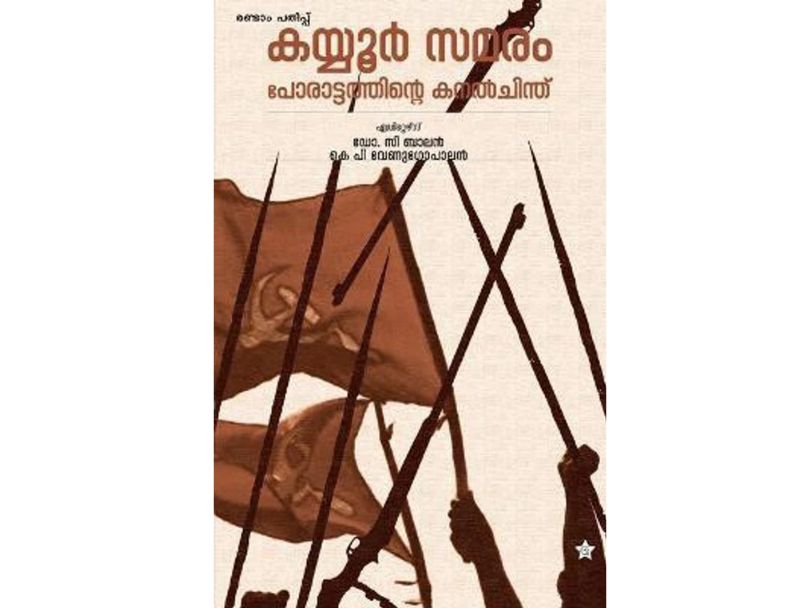
Kayyur Samaram

Kayyur Samaram (strike), [28th March 1941], refers to the historic fight of peasants against feudalism and British imperialism in 1941 in Kayyur village in South Canara, in present day Kasargod district. The movement and demonstration was organised by the leadership of Communists. It refers to the struggle of tenant farmers for their rights in 1941 as well as to the martyrdom of 4 members of the communist party who were tried and hanged in 1943.

Background

Even though people lived close to Malabar culturally, administratively this area fell in the South Canara district. The Malabar Tenancy Act was not implemented in this part of Madras Presidency. Due to this, farmers were overwhelmingly burdened with unfair taxation system imposed by the British and farmers here did not have tenancy rights. The [Nilambur natturajavu?] was in charge of levying taxes and passing it onto the British. Due to expenditures in the war, the British had increased the taxes imposed on the farmers. A host of issues were raised by the karshaka sanghams (peasant organisations) in the interest of the farmers.

Chronology

Many protests followed the struggles of agricultural labourers and tenants. In one of the protest marches at Kayyur, Constable Subbeyan, who on the previous day had attacked the protesting farmers, came in front of the march. The protestors were agitated and wanted to attack him. Upon the insistence of the leadership, all untoward incident was avoided and he was made to carry the red flag and lead the march from the front. Upon seeing the river, Subbeyan jumped into it and drowned to death. Story has it that the protestors stoned him to death.
The police began their siege on Kayyur after 2 days, leading to mass repression, arrests and disarray. Many leading members and farmers associated with the struggle were forced to go underground. Many of them who had nothing to do with the incident were arrested and tried.

An FIR accusing 61 people were filed by the police. Initially 5 people were sentencesd to death, However, owing to the age of the Churikadan Krishnannair, his dealth penalty was commuted to 5 years imprisonment. The trial, the jail terms and the eventual death penalty of the Kayyur struggle was of much significance. The statement by the 4 that there are many limitations on women’s participation in our society and that women need to come out to participate in struggles is much widely quoted. It has been later on attributed to an interview given to then female correspondent of Deshbhimani, P. Yasoda in jail. Similarly, about his visit to the jail to meet them, P C Joshi, then General Secretary of Communist Party of India is believed to have told them that meeting them was one of the greatest days of his life.

The names of the four martyrs were Madathil Appu, Koyithattil Chirukandan, Kunhambu Nair and Abu Backer, were hanged to death on 29th March 1943.
The Bhokna Session of the All-India Kisan Sabha met in Punjab to mark 29th March- Kayyur Day as the All India Kisan Day, when all the village units across would rally and pledge to carry the struggle of the Kayyur martyrs forward.

Popular Culture

Chirasmane, a novel written by famous novelist and journalist Niranajana from Karanataka was based on the Kayyur struggle.

References

  • “കയ്യൂർ സമരം.” Malayalam Wikipedia. Retrieved from
    https://ml.wikipedia.org/wiki/കയ്യൂർ_സമരം
  • Sreevidya, V. “Peasant Struggles in Malabar: Women’s Perspective.” Proceedings of the Indian History Congress, Vol. 62 (2001).
  • “Kayyur Martyrs: The Stars that Shine Brightly.” People’s Democracy, March 2020. Retrieved June 10, 2022, from https://peoplesdemocracy.in/2020/0322_pd/kayyur-martyrs-stars-shine-brightly
  • K. K. N. Kurup. “Peasantry and the Anti-Imperialist Struggles in Kerala.” Social Scientist, Vol. 16, No. 9 (Sept 1988): 35–45.