
"Explore the rich tapestry of the Malabar region, where centuries of history, culture, and tradition come together.

Get In Touch

img

University of Calicut,
Edapally - Panvel Hwy, Thenhipalam,
Kerala 673635, India

Malabar History journal

  • Home
  • Malabar History journal
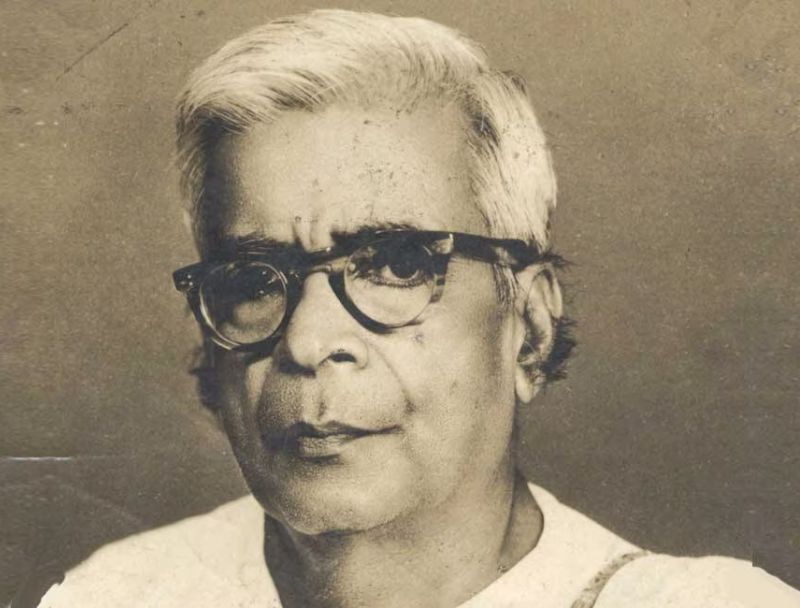
Blog Image

K Kelappan

Freedom fighter, a social reformer, renaissance leader, journalist, politician and the founding member and president of Nair Service Society (NSS), Koyapalli Kelappan (24 August 1889 – 7 October 1971) fought two battles, one for social reforms and the other against the British. His close association with Mahatma Gandhi reflected in his attitudes and ideals, and he was thus known as Kerala Gandhi. The lead figure of Indian National Congress in Kerala, he was chosen as the first satyagrahi from Kerala in the individual Satyagraha Movement launched by Gandhiji. He led Vaikom Satyagraha and Guruvayur Satyagraha and he was also the founder of Kerala Kshetra Samrakshana Samithi (Temple Protection Movement). In his honour, India Post released a commemorative stamp in 1990.

Biography

K Kelappan was born on 24 August 1889 in Muchukunnu village in Calicut. His father was Kanaran Nair and mother was Kunjamma Amma. He studied in Calicut and Madras. Graduated from the University of Madras, he began his career as a teacher at St. Berchmans High School, Changanacherry and then as principal of Karukachal High school run by Nair Service Society. Later, he studied law in Bombay which he gave-up to join the Non-cooperation movement led by Mahatma Gandhi and joined the freedom movement. Thereafter, he actively participated in the freedom movements and became one of the most prominent leaders of the freedom movement. He served as editor of Mathrubhumi in 1929 and 1936. Again he served as editor of Samadarshi in 1954.

He led the Indian National Congress in the state of Kerala. He was selected as the President of Malabar District Board in 1938. He became the President of Kerala Pradesh Congress Committee in 1945 and continued in the position until 1950. During this period, he tried for the unification of Kerala. In 1951, after he resigned from Congress Party, Kelappan initiated the formation of Kisan Mazdoor Praja Party (KMPP) and worked as a national executive member and also as the chairman of Malabar committee. In 1952, he contested to Lok Sabha as a candidate of KMPP from Ponnani constituency and was elected. Later KMPP and Indian Socialist Party joined together to form Praja Socialist party (PSP) and Kelappan continued in the leadership. He decided to leave party politics and started working with Sarvodaya Movement in 1955. He was a strong critic of Marxism and of the policies of the EMS Namboodiripad-led Left government. The Rural Institute at Thavanoor was established by him, which is now part of the Kerala Agriculture University. He died on October 7 1971.

National Movements and Social reformation

Attracted to the Non-cooperation movement led by Gandhiji, he gave up his studies and joined the movement. Kelappan led Payyanur and Calicut Salt Satyagraha and was chosen as the first satyagrahi from Kerala in the individual Satyagraha Movement launched by Gandhiji. Vaikom Satyagraha and later, Guruvayur Satyagraha in 1932 brought Kelappan to the forefront of the freedom struggle in Kerala. His role in the peasant movements in Malabar was also significant. He was at the forefront of the Swadeshi movement and did his best to build a base of khadi and village industries. He was frequently arrested and imprisoned by the British for his role in the freedom struggle. He was jailed for his participation in the Quit India Movement in 1942. Like Gandhi, he believed that the real struggle for freedom was not only against the British but against social evils in our own society. He strived for the upliftment of the downtrodden in society. Worked to eradicate untouchability and for the upliftment of harijans, he also set up many harijan hostels and schools in Kerala. He was among the first in Kerala to drop the surname that advertised his caste status. He led the ‘Thali Temple Movement’ to rebuild an ancient temple at Angadipuram in Malappuram, which had been destroyed by Tipu’s forces in the 18th century — an effort that had been disapproved of by the state government on the grounds that a mosque now stood nearby— and conducted a successful ‘Satyagraha’ for the reconstruction of the temple. Today, both places of worship stand side by side in Angadipuram, testimony to the harmonious flourishing of religious coexistence among the two principal communities.

When Acharya Vinoba Bhave started the Bhoodan Movement to persuade landlords to give land to the landless, Kelappan was the movement’s foremost voice in Kerala. Landless people were given plots of land that were donated by big landlords, to cultivate and to settle. Non-agricultural practices and selling of land was not permitted. The first batch of people to have donated land for the noble cause was K Kelappan and his sister. They jointly donated up to 35 acres of land in Kozhikode.

Guruvayur Satyagraha

Apart from all the other contributions, one of the major achievements attributed to K Kelappan is the Guruvayur referendum. It was in the late 1920s, a movement for the right to enter the Guruvayur temple for lower caste emerged. Kalapan led a movement against the restriction and also called for abolition of untouchability. By 1931, the Satyagraha was led by him. Many prominent leaders like A K Gopalan and M P Damodaran joined the movement. He entered fasting in front of the temple on 21 September 1932 after seeing no progress even though the movement continued for about 10 months. The movement reached another stage and leaders from all over the country urged him to stop fasting. Finally at the behest of Gandhi, on 2 October 1932, he broke his fast. As a result of this, a referendum was taken within Ponnani Taluk held among the Hindus on their views of temple entry. More than 77 % of temple going people voted in favour of temple entry for all. Even though this did not immediately result in the opening of Guruvayur Temple, it was finally made open to all in 1946. This referendum paved the way for many private temples owned by savarnas and upper caste groups to open their doors to the public at large irrespective of caste and class.

References

  • “K Kelappan – Kerala Gandhi.” Indian Culture. Retrieved from http://indianculture.gov.in/node/2790408
  • “Kelappan K.” Kerala Media Academy Archives. Retrieved from http://keralamediaacademy.org/archives/?q=content/kelappan-k
  • Tharoor, Shashi. “K Kelappan, the ‘Kerala Gandhi’ India Has Forgotten.” The Quint, 8 October 2021. Retrieved from https://www.thequint.com/voices/opinion/k-kelappan-the-kerala-gandhi-india-has-forgotten
  • “K Kelappan.” Wikipedia. Last edited 6 August 2022. Retrieved from https://en.wikipedia.org/wiki/K._Kelappan
  • Sankaran, T. M. “A Short Biography of ‘Kerala Gandhi’ K. Kelappan.” IndiaStudyChannel.com, 2 October 2014. Retrieved from https://www.indiastudychannel.com/resources/165561-A-short-Biography-of-Kerala-Gandhi-KKelappan.aspx