

Fazal Pookoya Thangal
Sayyid Fazal Pookoya Thangal (1820-1901) was a Muslim scholar and political leader. He was the only son of Mamburam Alavi Thangal, a renowned scholar based in the Malabar district of Kerala.

"Explore the rich tapestry of the Malabar region, where centuries of history, culture, and tradition come together.

University of Calicut,
Edapally - Panvel Hwy, Thenhipalam,
Kerala 673635, India


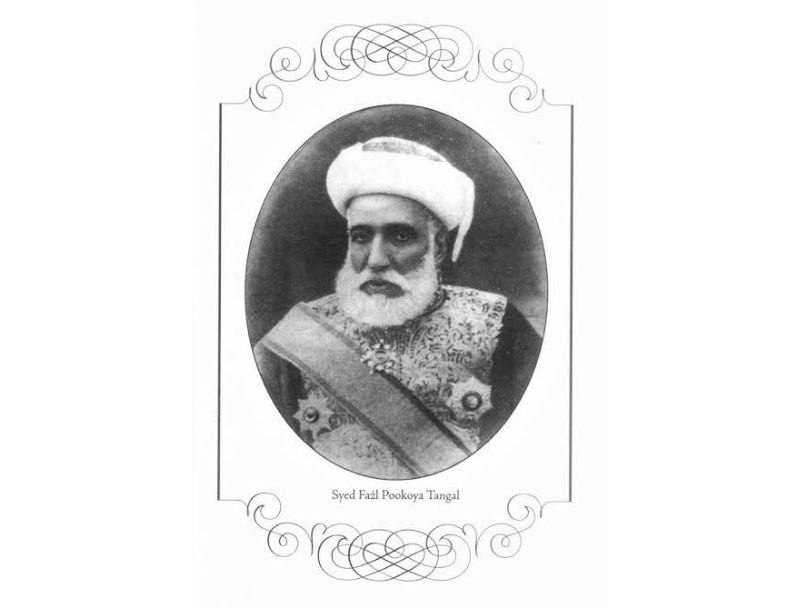
Sayyid Fazal Pookoya Thangal (1820-1901) was a Muslim scholar and political leader. He was the only son of Mamburam Alavi Thangal, a renowned scholar based in the Malabar district of Kerala.
Anti-colonial struggle
He motivated people to develop anti-colonial sentiments. He urged the tenants to not practise the custom of eating food remains of landlords and not pay them higher regard. He wrote a book titled ‘Ud-hatul Umara’ in which he enlisted reasons for the decline of the Muslim community. The reasons were the forgetfulness of the Muslim scholars from commanding what is right and withdrawing from what is wrong, the decay that has occurred to Muslims socially, and the advancement towards materialism without limits. He also argued that the Portuguese invasion of the 16th century into their homeland caused further internal chaos that the community was going through at the time. The only way out of the weakness of the community, according to Fazl Thangal would be when Muslims revive themselves internally.
The anti-colonial stance Thangal had, led Britishers to charge him with fake offences in relation to the Manjeri riot of 1849, the Kolathur riot of 1851, Mattannur riot of 1852. The Britishers argued that Thangal had provided assistance for these riots. Considering the chances of his arrest and a fight that would follow it, he travelled to Arabia with two of his sons, sister Fathima beevi and her spouse, and attendants. The departure of Fazl thangal made his followers fight against the British official Conoley who framed charges against him. Conoley was killed in a bungalow in Vellayil of Kozhikode.
At first, Thangal moved with a few of his family to Hadramowt and Muscat. After leaving some of his relatives in Hadramowt with a promise of return, he moved to Constantinople (the present-day Istanbul of Turkey). The Turkish government appointed him as a governor of Swafara there. Once, there occurred a clash between Amir Syed of Muscat and the soldiers of Turkey at his governorate. To avoid bloodshed between Muslims when he was in rule, he resigned from the governor position and moved to Makkah for a short while. After a few days, he travelled back to Constantinople through Egypt. When he returned to Istanbul, Sultan Abdul Hamid appointed him as a member of the cabinet. He died in 1901.
He authored 25 books. He wrote books on Islamic theology and Jurisprudence. He also wrote books as part of his anti-colonial activities such as Uddatul Umara, Ala’ man yuwaaril qufaar which explained how Muslims should develop social relations among people of the other faith. Hulalul Ehsan Fee Thaheenul Insan, Asasul Islam fee Bayani Ahkam, Risalathul Muslim Ila Habir lil habr yadru’ al Kabir, isha’fu Shafeeq fee Bayarak, Id haarul asrar are among the few of his other works.