


"Explore the rich tapestry of the Malabar region, where centuries of history, culture, and tradition come together.

Get In Touch

img

University of Calicut,
Edapally - Panvel Hwy, Thenhipalam,
Kerala 673635, India

Malabar History journal

  • Home
  • Malabar History journal
Blog Image

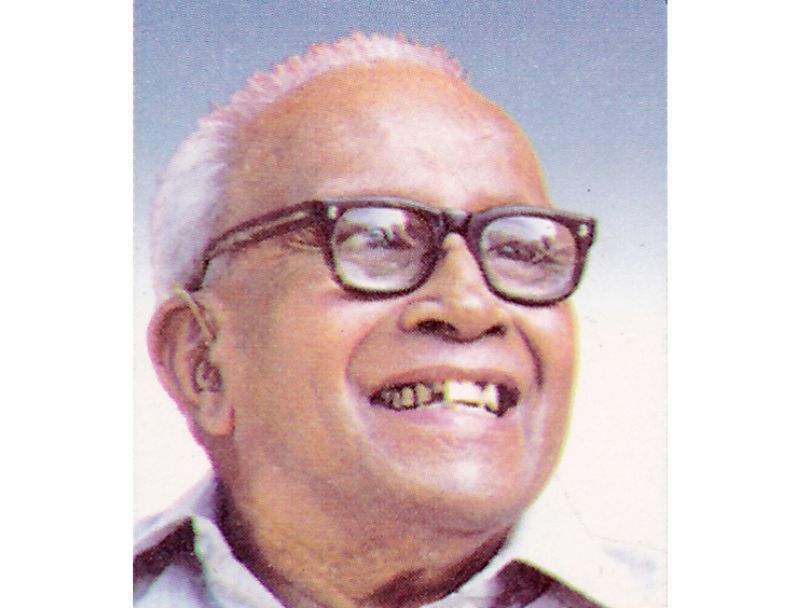
EMS Namboodiripad

EMS Namboodiripad [13 June 1909-19 march 1998], popularly known as EMS was a Marxist theoretician, a remarkable journalist and a popular and versatile political activist. He was the first ever non-Congress Chief Minister in power in India, having been elected to power in 1957. After this government was dissolved in 1959, he again became chief minister in 1967 in the state. EMS, Elankulam Manakkal Sankaran was born to Parmeswaran Namboodiripad and Vishnudatha Andarjanam on 13th June 1909 in Perintalmana taluk of presently Malapuram dist. He was born into an aristocratic upper-caste brahmin family. He married Arya Andarjanam in 1937. He passed away on 19 March 1998 at the age of 88 after contracting pneumonia.

In his youth days, EMS was active in the Valluvanad Yoga kshema Sabha, an association of progressive Namboodiri youth, which fought against casteism and conservatism amongst the Namboodiri community. In 1932, he went to prison for having joined the civil disobedience movement, where EMS and his radical associated met a lot of revolutionaries from Bengal. The Gandhi-Irwin pact and the abrupt end to civil disobedience left EMS and his associates deeply disillusioned with Gandhi’s politics.

He was one of the founding members of the Congress Socialist party in 1934. In 1935, he was one of the founding members of the unit under the Communist Party of India. Along with others, such as K Damodaran, Joseph Mundassery etc, he founded the Kerala Jeevat Sahitya Prastanam in 1937, the predecessor to the Purogamana Sahitya Prastanam- the Progressive Writers Association.

He was also the founding member of newspaper Prabhatham in 1935. Prabhatham’s role in advancing progressive thinking and supporting radical politics, including it’s support of agrarian movements is well documented.

Since it played an active role as an organiser and agitator, Prabhatham was often banned. However, along with AK Gopalan, EMS took the initiative to form the Deshbhimani newspaper, which later-on became the official organ of the CPI-M Kerala State Committee. At various stages, the newspaper was fined or banned by the government, because if it’s endorsement of radical politics. In 1946, the newspaper was banned temporarily for publishing ‘1921- A Call and Warning (1921nte ahvanavum thakeethum)’, which was a critical appraisal of the Malabar Rebellion written by EMS. EMS also sold his ancestral property and submitted the entire amount to the running of the newspaper, to which he remained an editor for various years.

His scholarly contributions to Malayalam literature, understanding of Kerala society and its’ social relations are immense. He wrote extensively on many issues including caste and land relations and the Nationality question of Kerala. Similarly, his contributions are exceptional on the debates on form and content in the Kerala literary sphere, including the formation of Progressive Association of Arts and Letters, Purogamana Kala Sahitya Sangham in 1981. EMS was instrumental in heralding what is known as Kerala Model of Development that has placed the state’s performance on many social indices to be high. He was one of the architects behind the revolutionary legislations on land reforms and education in Kerala during the first term of a communist-led government.

References

  • “E. M. S. Namboodiripad.” Wikipedia. Retrieved from
    https://en.wikipedia.org/wiki/E._M._S._Namboodiripad
  • “Deshabhimani: Organ of the Communist Party of India (Marxist).” People’s Democracy (September 8, 2002). Retrieved from https://archives.peoplesdemocracy.in/2002/sept08/09082002_deshabhimani.html
  • P. Govinda Pilla. “EMS as a Literary Critic and Cultural Activist.” The Marxist, Vol. 14, No. 1–2 (Jan–June 1998).
  • “Deshabhimani.” Wikipedia. Retrieved from https://en.wikipedia.org/wiki/Deshabhimani#:~:text=It%20was%20in%201942%2C%20through…
  • “About Us.” Deshabhimani. Retrieved from https://www.deshabhimani.com/about-us