
"Explore the rich tapestry of the Malabar region, where centuries of history, culture, and tradition come together.

Get In Touch

img

University of Calicut,
Edapally - Panvel Hwy, Thenhipalam,
Kerala 673635, India

Malabar History journal

  • Home
  • Malabar History journal
Blog Image

Dars education in Malabar

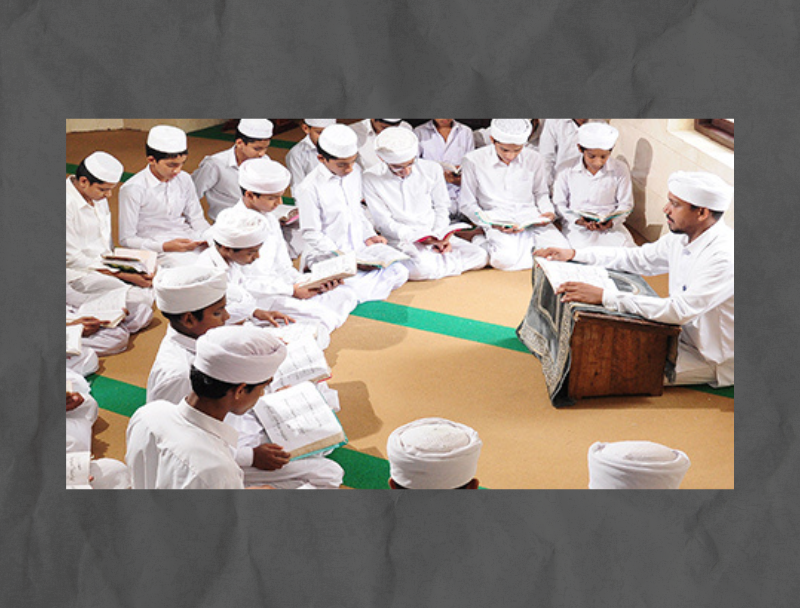
The Dars system, an indigenous mode of Islamic education, has been a cornerstone of intellectual and religious life in the Malabar region of Kerala for centuries. Etymologically, the term ‘Dars’ is derived from the Arabic word meaning ‘lesson’ or ‘lecture,’ aptly encapsulating its core function. Embedded within the socio-religious fabric of Malabar, the Dars have been instrumental in transmitting Islamic knowledge and values across generations. Originating as an informal mode of instruction, the Dars has evolved, integrating with the changing socio-political landscape while preserving its core principles. Traditionally, attached to mosques, the Dars offered a comprehensive curriculum encompassing Quranic studies, Arabic language, Islamic jurisprudence, and theology. This holistic approach to education is aimed at producing not just religious scholars but also individuals equipped with critical thinking and ethical acumen.

The Dars system had its beginnings when Islam arrived in Malabar in the 7th century CE when Arab traders and missionaries brought Islamic knowledge and practices with them. These early foreigners settled here for six months between their return. Probably they conducted informal classes for their own people to engage in learning religious affairs. Later this extended to local communities where they shared their faith and religious understanding. As the Muslim community grew and established deeper roots in the region, the need for a more organized system of Islamic education materialized, and mosques, the centers of Islamic life, became the ideal locations for these classes.

Several factors contributed to the flourishing of Darses in Malabar:

Socio-cultural milieu: The region’s tolerant and pluralistic environment fostered intellectual curiosity and a thirst for knowledge.

Linguistic affinity: The prevalence of Arabic, the language of the Quran, provided a linguistic bridge for the transmission of Islamic knowledge.

Economic prosperity: Malabar’s trade-oriented economy generated a class of affluent Muslims who could support the establishment and maintenance of educational institutions.

Religious fervor: The deep-rooted faith of the Malabar Muslim community created a strong demand for religious education.

Pedagogy in the dars

Malabar’s Dars system is notable for its distinct characteristics. Notably, the ‘gurukul’ way of life, in which students lived with local families, developed a close connection between the community and learning. Furthermore, the system’s emphasis on oral transmission and memorization, along with restricted usage of written materials, resulted in a unique learning environment.

One of the outstanding features of this system is that the duration of this course took ten to fifteen years. The books were taught in a sequential manner. The first textbook was known as ‘Path Kitab’ or ‘AsharatuKutub’, which literally means ten books. It deals with faith (Aqaid), moral sciences (akhlaque), and Islamic mysticism (Tasawwuf). Then grammar books such as Alfiya, Zanjan, Ajnas, etc. were taught. Alfiya was a collection of thousand verses on grammar. This was followed by books on Prophetic traditions such as Mishkat al Masabih, Sahih Bhukhari, Sahih Muslim etc.. Fat’hul Mueen by Shaikh Zainuddin Makhdum (1532-1618 A.D) was taught as text books of jurisprudence. At a later stage, Tafsir Jalalain was taught. Some of the subjects taught were Arabic language and literature, grammar, rhetorics, geometry, astronomy, arithmetic, logic, philosophy, medicine, history and mysticism. Some of the text books were Uqlaidis (Euclid) in Geometry, Tashreehul Aflak in Astronomy, Tashreehul Mantiq, Sharahu Tahdib Qutubi and Mulla Hasan in Logic, Mabadi in Philosophy and AlRahmat in Medicine. But in many Darses all these subjects were not taught. Generally the syllabus was confined to Arabic grammar, Quran, Hadith and Fiqh. The Dars system followed its own method mainly based on by hearting the lessons. Some potential pedagogical features of Malabar’s darses might include:

  • Oral Tradition: Strong emphasis on memorization and recitation of Quranic verses, Hadith, and classical Islamic texts.
  • Classical Texts: Focus on core Islamic texts like Quran, Hadith, Tafsir, Fiqh, and Arabic grammar.
  • Language Medium: Primarily Arabic, with some local language (Malayalam) used for explanation.
  • Teacher-Centric Approach: Traditional darses often follow a teacher-centered model, with the teacher as the primary source of knowledge.
  • Lifelong Learning: Emphasis on continuous learning and seeking knowledge throughout one’s life.
  • Spiritual and Ethical Focus: Integration of spiritual and ethical dimensions into the curriculum.
  • Free Education: Traditionally, dars education was offered free of cost, making it accessible to all.
  • Residential System: In many cases, students lived within the mosque complex, fostering a strong sense of community and shared learning.
  • Community-Centric: Dars are typically attached to mosques, making them integral parts of the local community.

Famous author Asghar Ali Engineer argues that the main drawback of the system was its defective teaching method. Another defect was that the Arabic language was taught not as a living language but for understanding religious texts.

Famous Darses in Malabar

With the arrival of Arab Muslims to Malabar, here witnessed an Islamic education movement. Darses were the earliest form of Islamic institutions which provided theological education for foreigners as well the locals. There were many famous darses in Malabar, and some of them still exist with the same glory of the past.

Imam Mohemmed ibn Abdullahil Hathrami established a comprehensive Dars educational system at the Tanur Valiya Kulangara Masjid in 670 hijra. It is said to have been first among the darses in Malabar by Arabs. Under this arrangement, the neighbourhood mosque served as the educational hub, housing students while they received an Islamic education. Dars, as opposed to madrasas, were overseen by the mosque’s imam, perhaps with assistance from a deputy. Subsequently, the adjacent coastal areas were included in this educational system. Tanur, therefore, was the most advanced settlement in the coastal region in terms of both education and culture.

The first and most well-known Dars was at Ponnani, which is said to have been founded by Zainudheen Makhdoom, the elder (1467-1521 A.D.), and later became known as the ‘Little Makkah of Malabar’. A vast number of students from various areas of India, as well as from areas like, Malaysia, and Java, studied there. In 1887, there were around 400 pupils at Ponnani Dars. Today, however, the Ponnani Dars, a traditional Islamic educational institution, is at the centre of this legacy.

Diffusion of knowledge through Darses

Darses were used to spread knowledge in a unique way. Because the pupils were fed meals from homes, they were treated as if they were family members. Such a student would inspire the family’s youngsters to pursue school. Members of the House might clarify their religious misgivings. This resulted in knowledge diffusion.

It is essential to note that the Dars system in Malabar was not a monolithic entity. It evolved over centuries, adapting to the changing socio-political and economic conditions. Western education and progressive ideas inspired the religious lead. While the Dars system has encountered problems in recent years, including competition from formal schooling and shifting social dynamics. While the fundamental ideas of Quranic study and Islamic law remained constant, the curriculum and teaching methods evolved gradually.

References

  • Abdul Samad, M. (1998). Islam in Kerala: Groups and Movements in the 20th century. Kollam.
  • Alam, A. (2004, May 31). Understanding Madrasa. Economic and Political Weekly.
  • Ibrahim Kunju, A. P. (1989). Mappila Muslims of Kerala. Trivandrum.
  • Engineer, A. A. (Ed.). (1995). Kerala Muslims: A Historical Perspective. New Delhi: Ajanta Publications.
  • Hafeez, M. (2018). Madrasa Education in Malabar and its Impact upon Beary Muslims of Karnataka. Islam and Muslim Societies: A Social Science Journal, 11(2).