


"Explore the rich tapestry of the Malabar region, where centuries of history, culture, and tradition come together.

Get In Touch

img

University of Calicut,
Edapally - Panvel Hwy, Thenhipalam,
Kerala 673635, India

Malabar History journal

  • Home
  • Malabar History journal
Blog Image

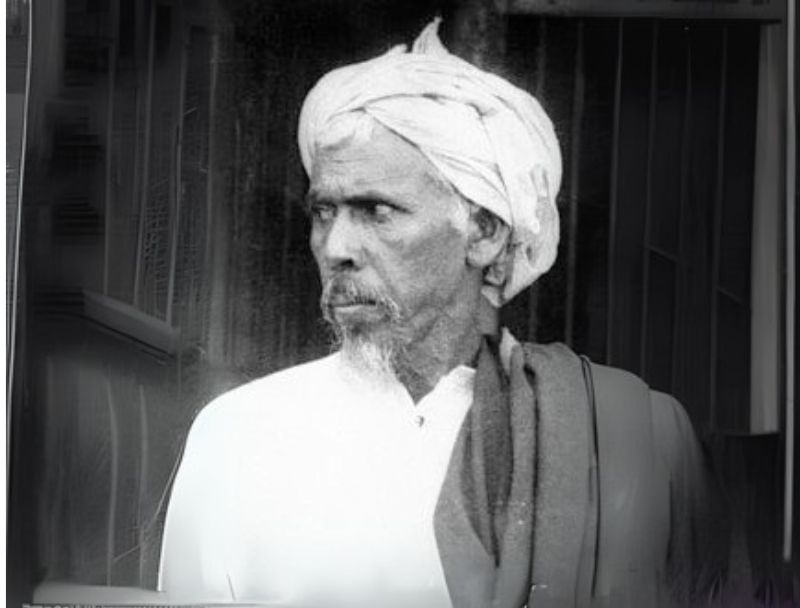
Ali Musliyar

Ali Musliyar (1854-1922) was a prominent scholar and freedom fighter based in the Malabar province of British India. He was a Makkah-educated scholar to have led several Dars and to inspire a large number of people in Malabar to participate in the Khilafat movement and strive for freedom from the British.

Biography

Ali Musliyar was born in 1854 in Nellikkuthu of Ernad taluk (Present Malappuram district) of Malabar. He belonged to a family of scholars based in Malabar named the ‘Maqdoom family’.

He was born to Erikkunnan Palath Moolayil Kunhi Moideen Sahib and Amina who was the daughter of Ottakath Mammad Kutty Musliyar. He received religious education under Karakkad Kunnummal Kunhikkammu Molla from Vellengat. After his training in the recitation of the Holy Quran, he acquired basic Islamic education and Arabic grammar under his uncle Nuruddin Musliyar. After that, to acquire more knowledge in the Islamic sciences he went to Ponnani. He joined Ponnani Jumuathu palli dars and studied Tafsir (Quranic exegesis), hadith (traditions of prophet Muhammad), Usoolul Hadith (Fundamentals of hadith), Fiqh (Islamic jurisprudence), Tasawwuf (Islamic mysticism), Ilmul Kalam (Islamic theology) and ilmul ma’ani (semantics). He spent 10 years in Ponnani learning various texts. By then, he had become a scholar who had memorized about 700 hadiths.

Upon the completion of his studies at Ponnani, Ali musliyar travelled to Makkah for further learning. He lived there for seven years. During his stay there, he memorized the Holy Quran completely.
Moreover, he studied under the famous muftis in Makkah at the time, Shaykh Muhammad Hizbullah Makki , Shaikh Sayyidul Ahmed Saini Dahlan. He studied books of Hadith written by Bukhari, Muslim, Tirmidhi, Baydawi and Muwatta among others.

After seven years of living in Makkah, the people of Kavaratti island of Lakshadweep called him to teach at their place. Accepting the invitation, in 1887, he moved to Kavaratti and joined there as a teacher in Valiya jumuathu palli. During that time, anti-British struggles were held all over Malabar. In 1891, his brother Mammadu Kutty was killed in the Mappila struggle at mannarkkad. The information was brought to him by his younger brother Muhammad Kutty musliyar who informed him about the death of many of their relatives. This persuaded Ali musliyar to get back to his family. He left Kavaratti and appointed his younger brother Muhammad Kutty musliyar at Kavaratti in his place.

Upon the return to his homeland, he was appointed as a Mudarris (teacher) at Thodikappalam Jumuathu masjid. After that, he served as a teacher at Podiyaadu Juma masjid. He also served in Melmuri Juma masjid for four years. He was appointed as a Mudarris in Tirurangadi Juma Masjid in 1907. Tirurangadi was one of the prominent centres for Islamic learning after Ponnani at the time. The people of Tirurangadi addressed him as ‘Molyaar uppapa’. He had three children. Abdullakkutty musliyar, Amina, and his third child died at a very small age.

Anti-Colonial Struggle

In the late 1920s, he established a Khilafat organization in Tirurangadi. It worked in collaboration with the Khilafat congress organizations in Kozhikode, Ponnani, and Ottappalam. The Tirurangadi congress was one of the two successful congresses to implement a cent percent non-cooperation with the British. He led the anti-British struggles in Tirurangadi.

Anti-British struggle in Tirurangadi

It was after he started teaching in Kizhakke Palli of Tirurangadi that Ali musliyar started directly involving in anti-British revolts. In 1920, he formed a Khilafat committee in Tirurangadi. He served as the vice president of the committee. He held expeditions to Eranadu and Valluvanad Taluk to inspire people to start Khilafat committees there.When the Khilafat conference was held on 24 July 1921, a group of scholars supportive of the British organized another conference in Ponnani. Ali Musliyar responded to it by leading his followers in Pookkottoor in procession to the Ponnani conference. There was a ban imposed by the British at the time on visiting and offering prayers in Mandani parambu where the martyrs of the Cheroor mutiny were buried. As a part of the civil disobedience of Khilafat movement, Ali Musaliar and his followers also paid a visit to Mandani parambu and offered prayers. This provoked the British and incited them to arrest Ali Musliyar. In the following day, rumours were spread that many people were arrested and the mosque was under attack, due to which a large number of people from Malappuram, Kottakkal, Tirur, Tanur and Parappanangadi marched to Tirurangadi. Ali Musliyar stopped the people on their way and told them that he would go to the police station himself and ask the authorities. When he did so, the police, after saying that they would release the arrested people, charged their guns at the people. This escalated the situation into a mutiny. Britishers were driven out of Tirurangadi by the people through joint resistance. After the Britishers left the place, Ali Musliyar set up a parallel government there. He was the head of the government and his close associates Kunjalavi was the soldier and Lava Kutty the minister.

The police and the army prepared themselves in retaliation for another struggle. On 30 August 1921, a group of policemen and army marched to Tirurangadi. By evening, they circled the mosque where Ali musliyar was present. Well prepared for an armed fight, the Britishers started firing continuously towards the mosque. Kunjalavi and others fought with the British with their swords. Finally, Ali Musliyar and 37 of his followers surrendered to the army recognizing that they didn’t have enough weapons to fight them. Thus, after 10 days of its rule, the parallel government led by Ali Musliyar came to an end. The Britishers looted the homes in Tirurangadi and those arrested were sent to Tirur. The case was tried at the Special Tribunal court at Calicut and the judgement came on 2nd November 1921. The judgement said that Ali musliyar was to be hanged on Saturday 18 February 1922. After an inquisition from Kozhikode, Ali Musliyar and his associates were moved to Coimbatore prison.

There were two opinions regarding how Musliyar died. According to one opinion, he died on 17 February 1922 during the morning prayer and the Britishers hanged him afterwards. The second opinion states that he was hanged by the British on 17 February 1922. He was buried in Shukran Petta of Coimbatore.

References