


"Explore the rich tapestry of the Malabar region, where centuries of history, culture, and tradition come together.

Get In Touch

img

University of Calicut,
Edapally - Panvel Hwy, Thenhipalam,
Kerala 673635, India

Malabar History journal

  • Home
  • Malabar History journal
Blog Image

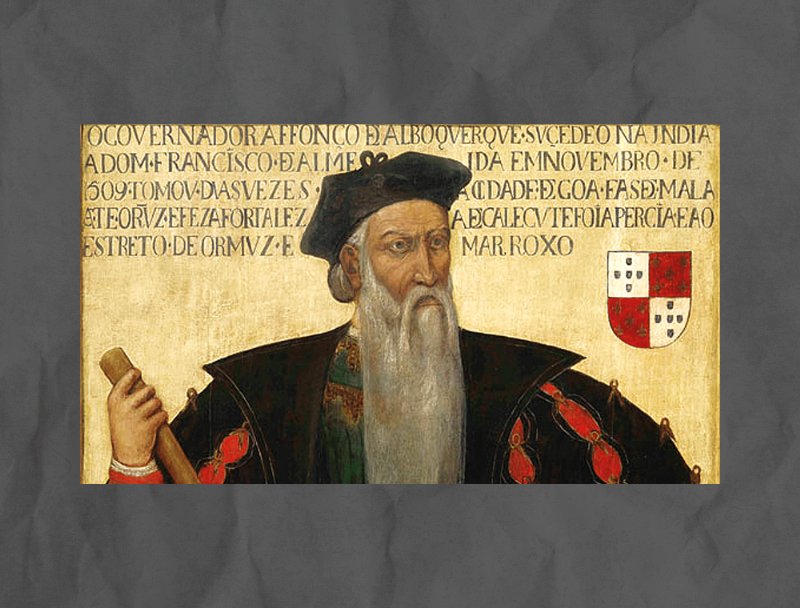
Alfonso de Albuquerque

Alfonso de Albuquerque was an admiral and served as the second Portuguese governor of India (Estado de India). He took charge as governor in 1510 A.D., from Gujarat to Cape Camorin. Albuquerque’s first expedition to India was carried out in 1503, when he and his cousin Francisco de Albuquerque each commanded three ships, sailing alongside Duarte Pacheco Pereira and Nicolau Coelho. After returning to Portugal in 1504, he was again dispatched to India in April 1506, leading a convoy of three vessels that escorted a cargo fleet under Tristão da Cunha. On his way to India, he attacked Ormuz and destroyed the ships anchored in the harbour. He advocated the land-oriented imperialist policy and abandoned sea-oriented policy of his predecessor Francisco de Almeida. His imperialist expansionist policy aimed to secure control over strategically and commercially important centers and resource-rich areas of the Indian Ocean for Portugal.

Immediately after becoming viceroy, he attacked Calicut in January 1510 and looted Zamorin’s palace. However, after suffering defeat and seeing that his blockade strategy failed to disrupt Calicut’s trade, Albuquerque recognised the Zamorin’s strength and decided to pursue a peace treaty. He soon realised that the ongoing conflict between the Portuguese and the Zamorin was more in the interest of the Kings of Cochin and Cannanore than to Portugal’s. Despite both sides having enough forces to confront the Zamorin, neither wanted to escalate the war, instead keeping the conflict alive and drag Portuguese into war. Albuquerque negotiated with Zamorin and secured permission to build a fortress in Calicut garrisoned by soldiers. Later, he conspired with the Zamorin’s heir to poison the reigning ruler and signed a peace treaty with the new Zamorin in 1513. Albuquerque believed that without peace, foreign merchants would continue to meddle, and as long as Calicut remained strong, the Venetians and Egyptians would prosper.

As part of land-oriented expansion of Albuquerque, Portuguese occupied Goa (1510), Malacca (1511), and Hormuz (1515). He understood the value of Malacca strait as the door to Southeast Asia; Ormuz as the entrance to Persian Gulf; and Aden as key to the Red Sea. He also built fortresses in Malacca and Hormuz. The attempt to capture Aden failed, however, he ensured regular patrolling up to the mouth of the Red Sea. Goa became the capital of Estado da Índia in 1530. To prevent pepper from falling into the hands of Muslim merchants from Malabar, fortresses were built in Quilon (1519) and Cranganore (1536). Additional fortresses were constructed at Bassein (1534), Diu (1536), and Daman (1559). The Portuguese also targeted the ports of Vijayanagara to control maritime trade and block Malabar’s Muslim merchants from exporting rice, leading to the construction of fortresses in Mangalore (1568), Barcelor (1568), and Honawar (1569).

The effectiveness of these fortresses was maintained and improved through regular patrolling along India’s western coast. Only vessels with a pass (cartaz) were allowed to sail in the Arabian Sea. The cartaz documented the vessel’s destination, captain’s details, and the nature and origin of the cargo, and gave the Portuguese an insight into trading activities of other merchants. However, this system negatively impacted Malabar traders. After 1509, everyone, including those supplying goods to the Portuguese required to obtain cartaz. While the cartaz system was introduced in 1502, Portuguese collaborators were exempted from it to ensure their continued cooperation. Initially, the Portuguese focused their attention on the western coast as the source of spices, leaving the eastern coast relatively untouched, which later became a hub for the commercial activities of Portuguese Casados (private traders).

To ensure a supportive future generation, Albuquerque encouraged Portuguese to marry locals, even permitted the soldiers to marry, thereby to strengthen local demographic base. These married Portuguese men then spread to various parts of Coromandel coast, and to support them, Albuquerque permitted them to engage in petty trading activites, opening shops, and seting up small manufacturing businesses like shoemaking, baking, and tailoring. This was part of his land-based policy, helping these Portuguese settlers establish a foothold in the eastern Indian Ocean. By 1520, their numbers had grown to 300, and the Portuguese Casados (settlers) emerged as significant players, capable of displacing Muslim mercantile intermediaries from Indian Ocean trade. They eventually became suppliers of goods from various Asian markets for the vessels bound for Lisbon.

Albuquerque is regarded as a great figure due to his ambition to establish complete Portuguese control over Indian Ocean trade, expel Egyptian and Venetian traders from Calicut, and secure Portugal’s naval dominance. He built fortresses at key strategic locations in the Indian Ocean and made Goa the base of Portuguese operations. These fortresses housed a standing force and maintained squadrons at sea. However, after Albuquerque’s death in 1515, his successor, Lopo Soares, reversed his commercial and administrative policies and reduced state intervention and promoted private trade.

References

  • Pius Malekandathil. Maritime India: Trade, Religion, Polity in the Indian Ocean, revised edition. New Delhi: Primus Books, 2013.
  • K.V. Krishna Ayyar. The Zamorins of Calicut: From the Earliest Times Down to A.D. 1806. Calicut: University of Calicut, 1999.
  • K.M. Panikkar. Malabar and The Portuguese. Bombay: D.B. Taraporevala Sons & Co, 1929.
  • E.G. Ravenstein. A Journal of the First Voyage of Vasco da Gama, 1497–1499. London: Hakluyt Society, 1898.
  • Geneviève Bouchon. Regent of the Sea: Cannanore’s Response to Portuguese Expansion, 1507–1528. Delhi: Oxford University Press, 1988, p. 23.