
"Explore the rich tapestry of the Malabar region, where centuries of history, culture, and tradition come together.

Get In Touch

img

University of Calicut,
Edapally - Panvel Hwy, Thenhipalam,
Kerala 673635, India

Malabar History journal

  • Home
  • Malabar History journal
Blog Image

Aaron Mill Strike, 1939

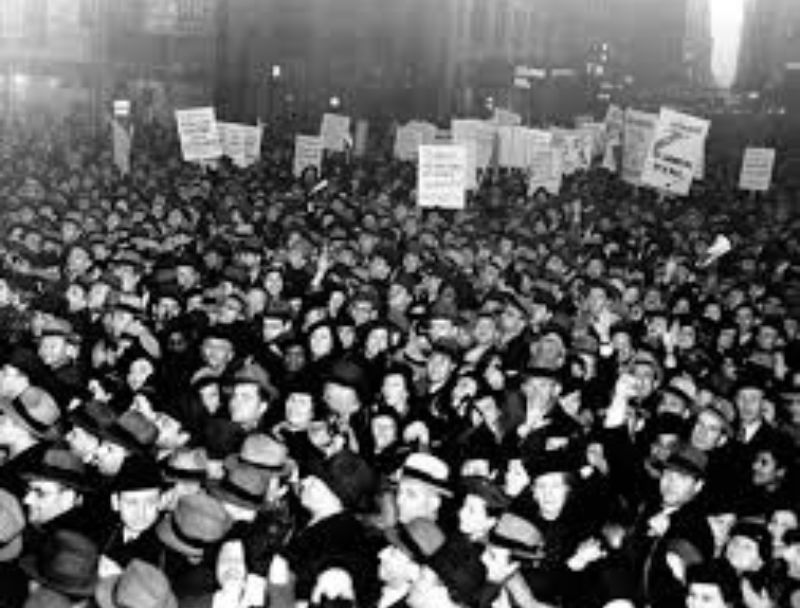
The Aaron Mill Strike was one of the first and important industrial working-class strikes organized by the Communist Party in the state of Kerala. When the management came to know about secretly held union activities in the mill, 30 workers were dismissed. The legendary Aaron strike is the 46 days long indefinite struggle of workers in the mill against the retrenchment of 30 fellow workers. The workers also demanded more concessions from the management regarding working conditions. This agitation was led by E K Nayanar locally, along with support from AK Gopalan and Krishna Pillai. KPR was also integral to organizing farmers and labourers in the region. Marches in solidarity, including that of farmers were held, who brought with them food for the starving families of the workers. Workers and members of the Communist Party were beaten up and arrested for participating in the strike.

Background

Samuel Aaron’s father had risen from being a foreman into that of a factory owner by their association as well as because of the tradition of the Basel Mission in setting up factories and looms for lower caste converts. The factory employed 48% protestants, and had over 300 looms. Unlike other factories during the time, which had provisions for sick funds, endowment provident fund etc., the workers at Aaron Mills only had access to a provision store from which it was mandatory to buy provisions. Again unlike other factories which provided housing facilities, owing to its location in the rural area, the workers at the Aaron Mill were not provided with housing facilities.

With the civil disobedience movement, and the launching of the Swadeshi campaign, picketing of foreign goods peaked in Tellichery, Kannur and Calicut, where cloth was piling up because of cheaper imports. Aaron Mills took the opportunity to tie up with the Swadeshi League, as an important node to route its products. Samuel Aaron saw this as an opportunity and even inaugurated the first Swadeshi shops. By 1936, it seems like he was able to raise a capital of 10 lakhs.

Precedent to the big strike, the first strike took place when on 28th March 1935, an employee was beaten by a weaving master. The worker hit back and he was dismissed. In protest, all the workers of the power loom struck work. Congress leaders from that time, Nayanar and KPR were contacted by the workers. It was believed that Samuel Aaron would help mitigate the problem. However, upon the arrival of Aaron, 16 workers out of the total 90 were dismissed, wages reduced and conditions imposed that the others would not continue with the union.

The retrenched workers joined Nayanar who formed the union for rights including union formation as well as reinstatement of jobs within the factory. This sparked the beginning of the long period of unionisation within the mill as well as the backdrop to the strike in 1939.

References

  • A. K. Gopalan. In the Cause of the People: Reminiscences. New Delhi: Orient Longman, 1956.
  • Dilip Menon. “A Fragile Affluence: Workers and Political Rhetoric in Kerala, 1930–1948.” Draft for Association of Indian Labour Historians, March 2008.
  • K. Goyalankutty. “Emergence of the Trade Union Movement in Malabar 1935–39.” Proceedings of the Indian History Congress 39, no. 2 (1978): 816–822.
  • Mohammed Nazeer. “October Revolution Fired Radical Zeal Here.” The Hindu, November 7, 2017. https://www.thehindu.com/news/national/kerala/october-revolution-fired-radical-zeal-here/article19994004.ece (accessed August 10, 2022).
  • R. Krishnakumar. “The People’s Leader.” India Debating India, India.EU.org, June 18, 2004. https://india.eu.org/spip.php?article1772 (accessed August 10, 2022).