


"Explore the rich tapestry of the Malabar region, where centuries of history, culture, and tradition come together.

Get In Touch

img

University of Calicut,
Edapally - Panvel Hwy, Thenhipalam,
Kerala 673635, India

Malabar History journal

  • Home
  • Malabar History journal
Blog Image

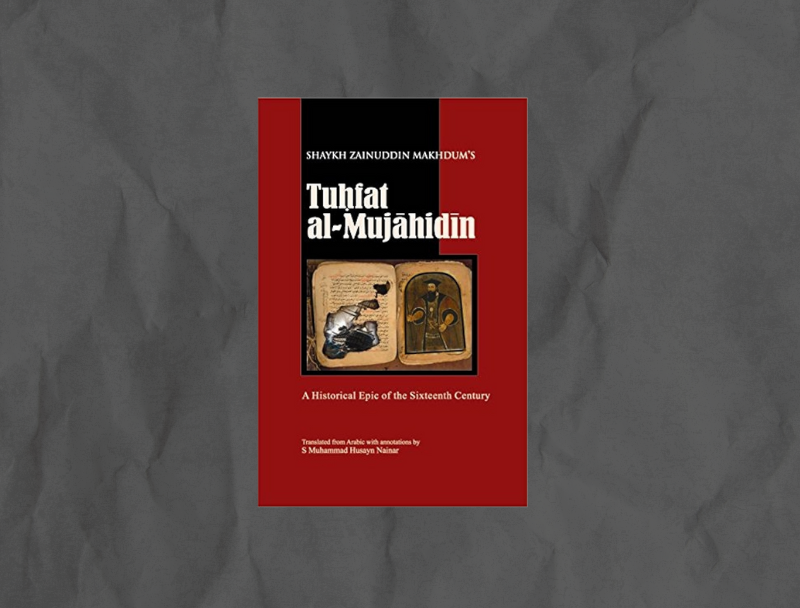
A Critical Approach to Tuhfat-al-Mujhahidin

The book Tuhfat-al-Mujhahidin is considered as an important historical text concerned with the history of Kerala, as it primarily deals with advent of Islam, the Muslim community, and advent of Portuguese and initial confrontations occurred after their arrival in Malabar during the 16th century. The text Tuhfat al-Mujahidin (Glory to the Victory of the Martyrs) is an important native source for the history of 16th century Kerala. The author of the book is Shaykh Zaynuddin Makhdum. The full title of the book is Tuhfat al-Mujahidin fi ba‘d Akhbar al-Burtughaliyyin (Tribute to the Holy Warriors in respect of a brief account encounter). The text was written in Arabic language. The ancestors of Shaykh Zaynuddin are believed to have come from Ma’bar (south-eastern coast of India). He was the grandson of Shaykh Zaynuddin, a renowned author of several Arabic works on Islamic theology, who died in Ponnani in 1521 A.D.

The book deals with chronological events on political and military accounts of the Zamorins of Calicut and their naval commanders, Kunjalis, against the Portuguese. In the introduction, the author describes the reasons for writing the book. It was written as a call for Muslims to take up jihad against the Portuguese atrocities against the Muslims and natives of Malabar. The first section discusses the merits of jihad by giving verses of the Qur’an as references. The second section narrates the historical accounts on the emergence of the Muslim community in Malabar. The third; portrays the customs and manners of the indigenous people. Following these sections, the text provides a detailed account of Portuguese activities from their arrival in 1498 to 1583 A.D. shedding light on the changing conditions of Muslims in Kerala. The book conveys that before the arrival of Portuguese, the Muslims were respected and enjoyed prosperity particularly through coastal trade. However, the Portuguese disrupted their trade and dominance in coastal trade. Subsequently the Portuguese influence became dominant, prompting the author to advocate jihad to restore peace and prosperity for the Muslim community, which was the central theme of the book. Notably, this jihad was not aimed at overthrowing the Zamorin or seizing territory but rather at ensuring the community’s well-being.

The book was written after 1583 A.D. and Shaykh Zaynuddin dedicated Tuhfat ul-Mujahidin to Sultan Ali Adil Shah of Bijapur. (1558-79/80). P.P. Sudhakaran questions the exclusive authorship of Zainuddin regarding the Tuhfat. He notes that the work was dedicated to the Sultan of Bijapur, Ali Adil Shah, who ruled from 1558 to 1579/80 A.D. The dedicatory passage is written entirely in the present tense, praising and blessing the Sultan with words such as, “May Allah grant perpetuity to his kindness and justice in the universe and enable him to pour on the people of the world his generosity and benevolence with the help of Muhammed and his prosperity”. This indicates that the Sultan was alive when the Tuhfat was dedicated. However, as the Tuhfat covers events up to A.D. 1583, it is clear that the dedication occurred before the text reached its final form. Since the narrative extends to A.D. 1583, it is evident that Zainuddin continued writing beyond Ali Adil Shah’s reign. Additionally, the fourth section of the Tuhfat, which addresses Portuguese activities on the Malabar coast, is written in the past tense and spans 85 years, from 1498 to 1583 A.D. This long-time span for an author either to live or to witness the events raises the possibility that Zainuddin either did not begin his work in 1498 or started writing only after the Portuguese began targeting the Muslim community.

Sudhakaran further notes that the Tuhfat mentions the Sultan’s peace treaty with the Portuguese in A.D. 1579, indicating that the dedication was likely made prior to that year. If Zaynuddin himself wrote and dedicated the Tuhfat, it is evident that the dedicated version would not have extended beyond A.D. 1578. Consequently, any content covering events after 1578 must have been added later.

Sudhakaran also notes that the fourth and final section of the Tuhfat concludes abruptly with the statement, “May Allah prosper the affairs of the Muslims, repair their losses, and fulfill their desires”. This closing does not directly connect to the preceding sentence which discusses the Zamorin of Calicut’s overtures to the new Portuguese chief in Goa during A.D. 1582-83. While this may not be significant, the sentence appears to function as a convenient conclusion that could be moved to accommodate further additions. This suggests that alterations or additions were likely made to the original manuscript after it was initially dedicated to Ali Adil Shah.

Sudhakaran addressed the question of the identity of the author who included the narrative in the Tuhfat of the events up to A. D. 1583 after its dedication. It might have been Zaynud-Din himself, but a more rational explanation suggest that additions were made by someone else. The manuscript of the Tuhfat was likely kept at the Makhdum Institution in Ponnani, where Zaynud-Din served as Mukhdum-Tangal, hence it is possible that his successors had access to it, therefore, they probably continued the account up to A. D. 1583.

The historian Ferishta acknowledged in his Gulshan-I Ibrahimi that much of his knowledge about the Muslims of the Malabar coast was drawn from Tuhfat al-Mujahidin. However, he did not attribute the work to Shaykh Zaynuddin by name. Feriishta did not mention the name of the author, and only mentioned text. Interestingly, Ferishta’s account extends to 1611, whereas Zaynuddin’s narrative ends in 1583, raising questions about the authorship of later additions. Muhammad Husayn Nainar, translator and editor of the Tuhfat al-Mujahidin, suggested that the material used by Ferishta may have come from a different version of the work or an entirely different author. This divergence and the presence of additional content indicate that Tuhfat al-Mujahidin may have undergone modifications or additions after Shaykh Zaynuddin’s original composition.

Thus, Sudhakaran argues that if the Tuhfat has been altered by anonymous writers to an uncertain extent, it will be unreasonable to treat the whole work as authentic based of the fourth chapter. Therefore, the Tuhfat as a source for the history of medieval Kerala requires a fresh historiographical evaluation.

References

  • Shaykh Zainuddin Makhdum. Tuhfat al-Mujahidin: A Historical Epic of the Sixteenth Century, trans. S. Muhammad Husayn Nainar. Calicut: Other Books, 2005.
  • P.P. Sudhakaran. “A Historiographical Note on the Author of Tuhfat-al-Mujahidin.” Proceedings of the Indian History Congress, Vol. 44, 1983.
  • A.P. Kunju. “Tuhfat Ul-Mujahidin, A Historiographical Study.” Proceedings of the Indian History Congress, Vol. 41, 1980.